1 Campaign, Every Product, Your Best Seller Never Got a Look In
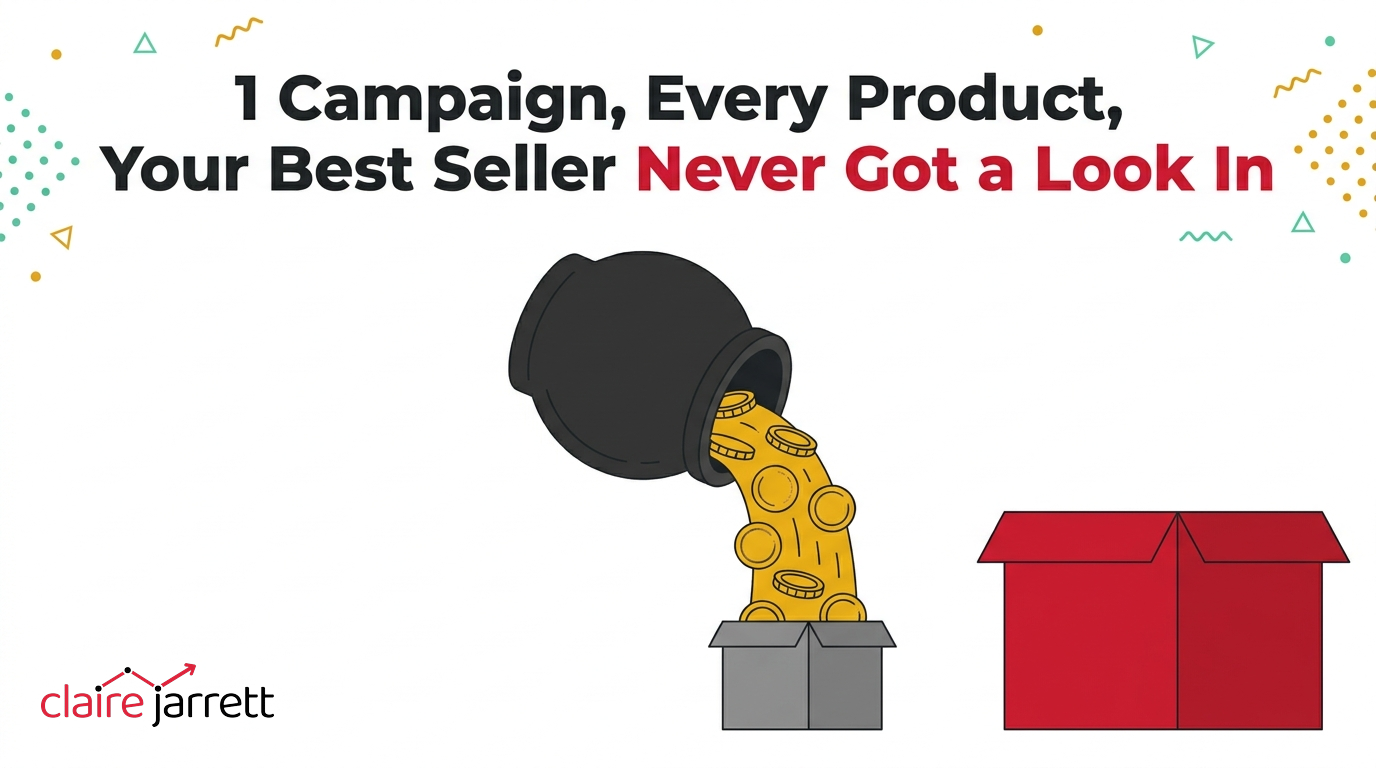
I audited an account recently for a business selling musical instruments, everything from beginner keyboards to concert-grade pieces worth thousands. Before I’d even finished the first pass, I found something that made me stop the recording: their most profitable line had barely appeared in the account at all.
Not because nobody was searching for it. Because it was sharing a single campaign, and a single budget, with everything else they sold.
Why 1 shared budget always picks a winner, and it’s rarely your best one
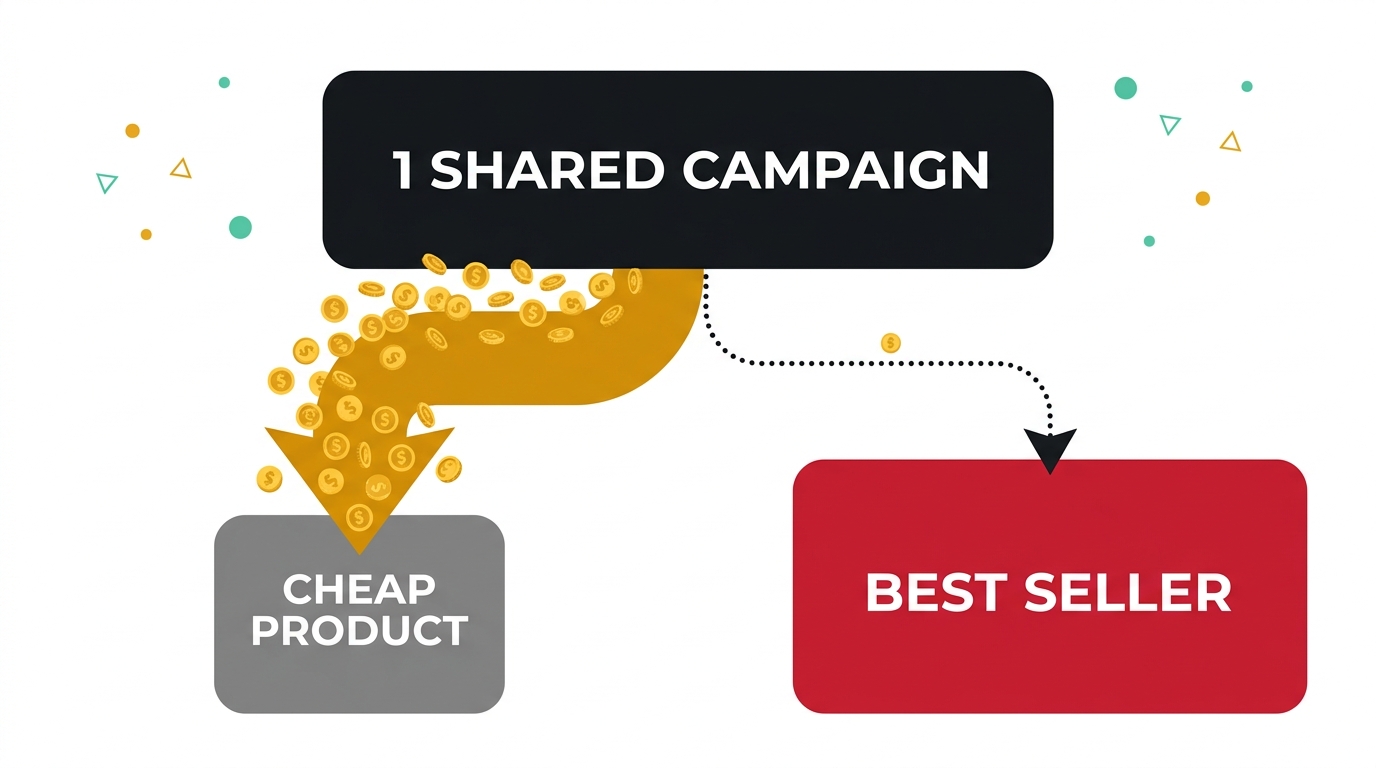
Google’s automated bidding doesn’t know which of your products makes you the most money unless you tell it, structurally, with separate budgets. Left to run inside 1 campaign, spend flows toward whichever product is generating the most impressions and clicks, not whichever product is generating the most profit. A cheaper product that sells in volume will always out-compete a pricier one that sells rarely, every time, because volume is the signal the system can see.
In this account, the range ran from beginner instruments to concert-grade pieces worth far more per sale. The account was set to a target return of 160%, meaning every £1 spent needed to bring back £1.60, but that target was being measured across the whole bundle at once. Bundled together, the beginner instruments hoovered up the impressions and the budget, while the concert-grade stock, the pieces actually worth chasing, were left with whatever was leftover. Nobody had decided that on purpose. The campaign structure had decided it for them.
If your most profitable product was in there, the reason it would have had not a look in at all is because you had it all combined into one campaign.
The account was also quietly bidding against itself
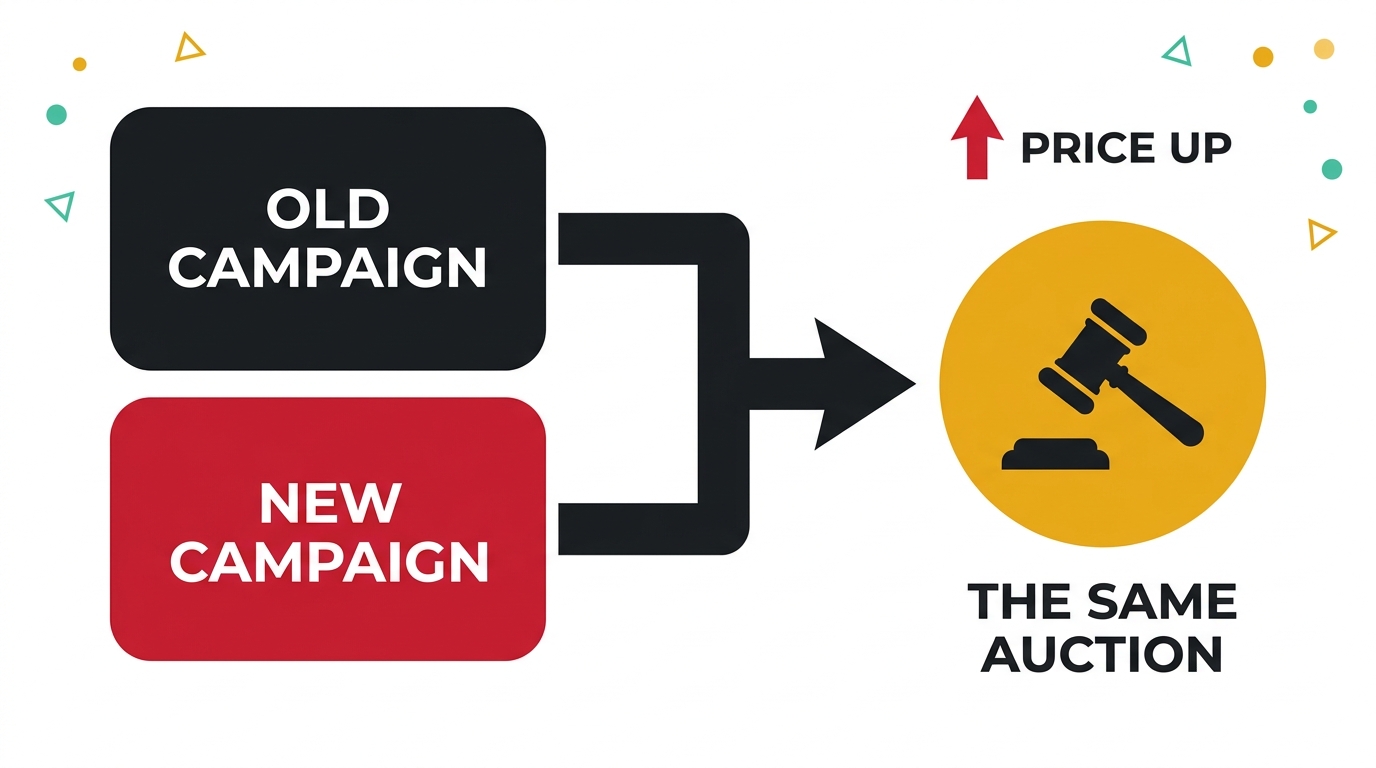
There was a second problem sitting underneath the first. An older, historic campaign was still live, running on a lot of the same keywords as the newer one, both competing to win the exact same auctions. 2 of the business’s own campaigns were bidding against each other for the same searches, which does nothing except push the price up and split the credit for whichever one happens to win that click.
This is easy to miss because nothing about it looks broken from the outside. Ads show. The odd sale still comes through. It took going into the account and lining the 2 campaigns’ keyword lists up side by side to see that they’d been fighting over the same handful of buyers the whole time, rather than each finding a different one.
How to check your own account for this
You don’t need specialist tools for either check, and both are things I go through on every audit I run.
- List every product or service in the account and ask which campaign each one sits in. If your highest-value offer shares a campaign and budget with your cheapest one, assume the cheap one is winning the impressions, whatever the reports say about overall performance.
- Pull up every active campaign’s keyword list and compare them. If 2 campaigns share a meaningful chunk of the same keywords, they’re competing with each other in the same auction, not dividing the market between them.
What a properly separated account actually looks like
Once you’ve found the overlap, the fix is structural, not a tweak to a setting.
- Give each product or price tier its own campaign and its own budget. That’s the only way to guarantee your most profitable offer gets spend on its own merits, rather than competing for leftovers against something cheaper and more clickable.
- Retire or fully separate the older campaign before it fights the new one. If a legacy campaign needs to stay live for any reason, its keyword list needs to be genuinely distinct from the new campaign’s, not overlapping on the same core searches.
It’s the same underlying lesson as the honey trap quietly sitting inside most Google Ads accounts: left unstructured, the account always drifts toward whatever’s easiest for the system to find, not what’s actually best for the business running it.
The bigger point
Nobody builds an account intending to starve their own best product of budget, or to have 2 of their own campaigns competing for the same customer. It happens because campaigns get added over time, products get bundled in for convenience, and nobody goes back to check whether the structure still makes sense once the account has grown. The business I audited hadn’t done anything wrong on purpose. Their most valuable product had simply never been given a fair fight.
If you sell more than 1 thing through Google Ads, at more than 1 price point, it’s worth 10 minutes checking whether they’re sharing a campaign, and whether an older campaign is still quietly competing with your current one. If you’d like a second pair of eyes on the structure, whether that’s a full audit or a conversation with a Google Ads consultant who’ll map out where your budget is actually going, that’s exactly what I’m here for. You know where I am.
A few questions I get asked
Why would Google favour a cheaper product over a more profitable one? Because automated bidding optimises for the signal it’s given, usually clicks or conversion volume, not profit per sale. Without separate budgets, a product that sells often for a little will always draw more spend than one that sells rarely for a lot, whatever the actual return looks like.
How do I know if 2 of my own campaigns are competing with each other? Pull the keyword list for each active campaign and compare them directly. If a meaningful number of keywords appear in more than 1 campaign, you’re bidding against yourself in the same auction, and paying more for the privilege.
Should every product always have its own campaign? Not always, but any product with a meaningfully different price point or profit margin should. Bundling similarly priced offers together is fine. Bundling your cheapest and most valuable offer together nearly always costs you the valuable one.
Does this only apply to businesses with lots of products? No. Any business selling more than 1 service or product tier through the same account faces the same risk, whether that’s service packages, membership levels, or product ranges. The mechanism doesn’t care what you sell.
2 ways I can help you get this right
If you sell more than 1 thing through Google Ads and want to know whether your best offer is actually getting a fair share of the budget, book a free Google Ads call and I’ll go through the account structure with you.
Or register for my free masterclass, How to Overtake Your Top Google Ads Competitors in 8 Weeks, and I’ll walk you through the whole approach.

Claire Jarrett
Google Ads consultant since 2007, published author (6 books), and Google Partner. Claire was the first person to launch Google Ads training in Europe and has helped thousands of professional service businesses scale their leads.
More about Claire