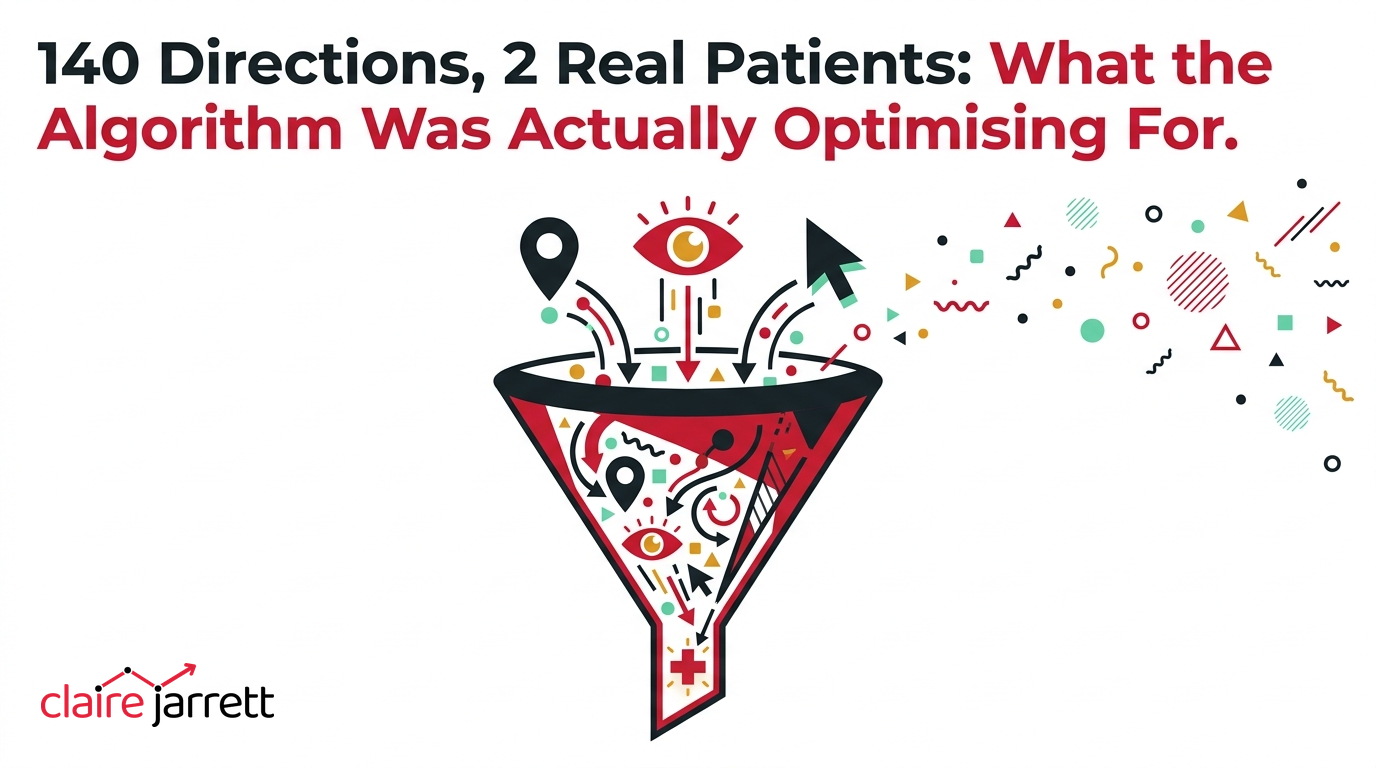
140 Directions, 2 Real Patients: What the Algorithm Was Actually Optimising For
I audited an account recently for the owner of an osteopathy clinic who had tried Google Ads 3 times over 3 months and concluded, fairly reasonably, that it didn’t work for her.
March, April and May each had a different campaign running. Every single one had been set to maximise conversions.
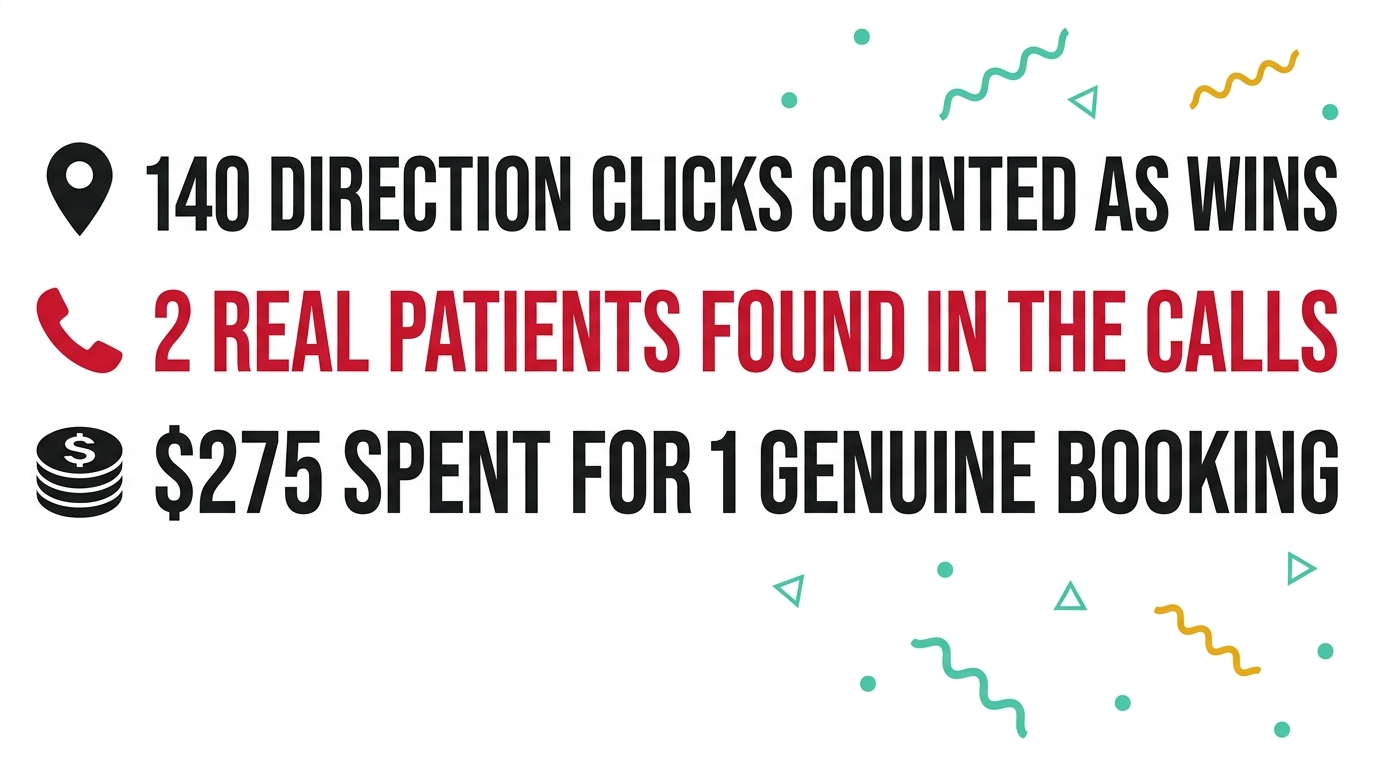
One of them spent $275 and recorded exactly 1 conversion. Another spent $230 for its 1.
By the time I’d counted properly, the clinic had paid for a lot of activity and very few actual patients.
Why “maximise conversions” cannot work without real conversions to learn from
This bidding strategy studies the conversions an account has already had, then goes looking for more people like the ones who converted.
With 1 real conversion to study, there is nothing to learn from. So Google does the only thing left available to it: it finds whatever it can get cheaply and calls that a win.
What Google was actually being told counted as a win
Nobody had told the account what a genuine enquiry looked like. So it had been counting all sorts of other things as equally good.
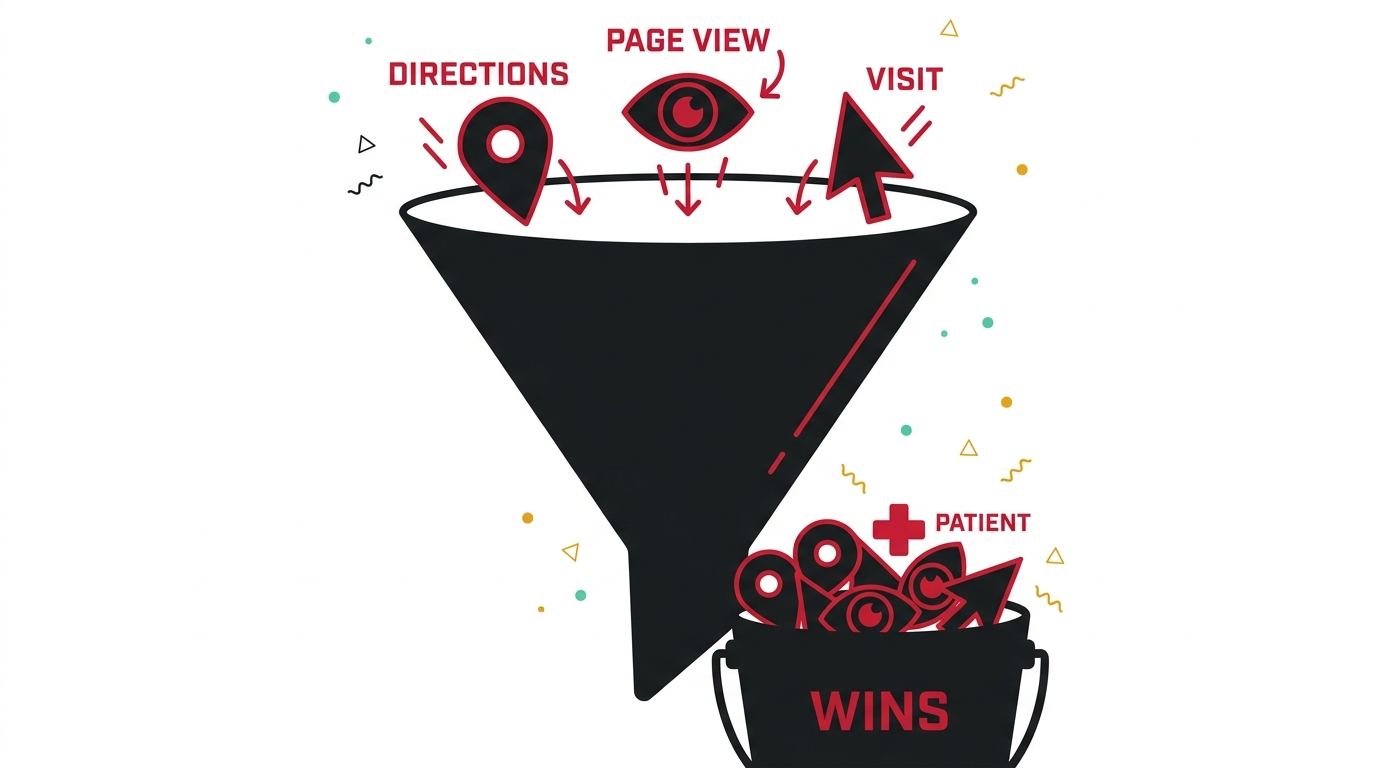
140 clicks for directions to the clinic were marked as conversions. 410 general engagements on the site were marked as conversions. 50 people who simply visited the site counted too, and so did 3 people who viewed the services page.
Tell Google that getting directions is a win, and it will go and find you more people who want directions. Not more patients.
Every one of those got treated the same as a phone call from somebody with real back pain, ready to book. The system had no way of telling them apart, because nobody had told it to.
The campaign that looked healthiest was the worst offender
One campaign looked like the success story of the 3. It had spent $140 and recorded 68 conversions, a cost per conversion that would make most owners relax.
60 of those 68 were people who had asked for directions. The remaining handful included a few genuine phone calls, at a real cost closer to $165 each once the directions were stripped back out.
A healthy-looking number on the wrong action is worse than an honestly bad one. The bad number at least tells you to go and look. This one told the owner everything was fine.
How to check what your own “conversions” really are
- Open the conversions screen and list every action being counted as primary. Cross off anything that isn’t actually a lead: directions, a menu or services page view, general site engagement. If “maximise conversions” is running, it is trying to get you more of everything left on that list.
- Check how long the calls actually last. A genuine enquiry runs long enough to discuss an appointment. Across this account, most calls connected and disconnected within seconds, and only 2 out of dozens looked like a real patient on the other end.
Signs the keywords are diluting the real signal
- Look for your own brand name inside a campaign set to maximise conversions. People who already knew the clinic’s name get counted as a win the same as a stranger who just found it, and Google will happily chase more of the easy, already-convinced searchers instead of new ones, the same gap proper negatives are built to close.
- Check whether unrelated intent is sharing an ad group with your actual service. “Neck pain relief”, “auto accident” and “personal injury treatment” were all sitting in the same ad group as “osteopath near me” here. Someone typing “whiplash treatment” hasn’t decided they need an osteopath yet. Someone typing “osteopath near me” already has.
- Look at the match type sitting behind each keyword. Broad match on “osteopath” had pulled in a misspelling, “osteopathe”, alongside searches for massage oil and stretching videos. Phrase and exact match would have kept the account talking to people who had already decided what they needed.
The bigger point
This clinic had not been ignored. 3 campaigns in 3 months is someone actively trying to make Google Ads work, not someone who’d walked away from it.
What never happened was labelling the conversions honestly. Directions and page views were left switched on as the goal, so the account spent 3 months getting very good at producing more directions and more page views.
That is the part a PPC consultant should catch on day 1, before a single dollar goes near a “maximise conversions” setting. It isn’t a judgement on effort.
It’s a function of what the system was actually being asked to chase. A dashboard built on the wrong actions will always look reassuring, right up until you count the real patients by hand.
This is also where I’d want AI reading the account itself, not just the dashboard summary of it. A model that can open the conversions screen and ask “is a page view really the goal here?” catches this in minutes. A model that only reads the headline number repeats it back with confidence.
If you want to find out what your own account’s conversions are actually counting, the audit checklist covers where to look first. You know where I am.
A few questions I get asked
Is “maximise conversions” a bad bidding strategy? No, it’s one of the better ones, but only once the conversions feeding it are genuinely leads. Point it at directions and page views and it will maximise those instead, perfectly.
Should I stop tracking things like directions or page views altogether? Not necessarily. They’re useful context as secondary actions. The problem here was having them set as primary, so the bidding strategy tried to get more of them specifically.
How do I know if my calls are genuine enquiries? Listen to a sample, or check call length if you’re not recording them. A real enquiry takes at least a minute or 2. Calls that connect and disconnect in seconds are not patients.
What should I check before trusting any conversion count on my dashboard? Every action type being counted, whether each one is marked primary or secondary, and whether your own brand name is excluded from the campaign that’s supposed to be finding new people.
2 ways I can help you get this right
If you want to know what your own account’s conversions are actually counting, book a free call and we’ll go through it together.
If you’d rather learn to read these settings yourself before the next “maximise conversions” campaign goes live, my masterclass How to Overtake Your Top Google Ads Competitors in 8 Weeks walks through exactly that.

Claire Jarrett
Google Ads consultant since 2007, published author (6 books), and Google Partner. Claire was the first person to launch Google Ads training in Europe and has helped thousands of professional service businesses scale their leads.
More about Claire