638 Clicks, 1 Landing Page: The Opposite of What a £25 Budget Needed
I audited an account recently for the owner of a personal training franchise that runs city by city, with each location holding its own small budget instead of sharing one pot.
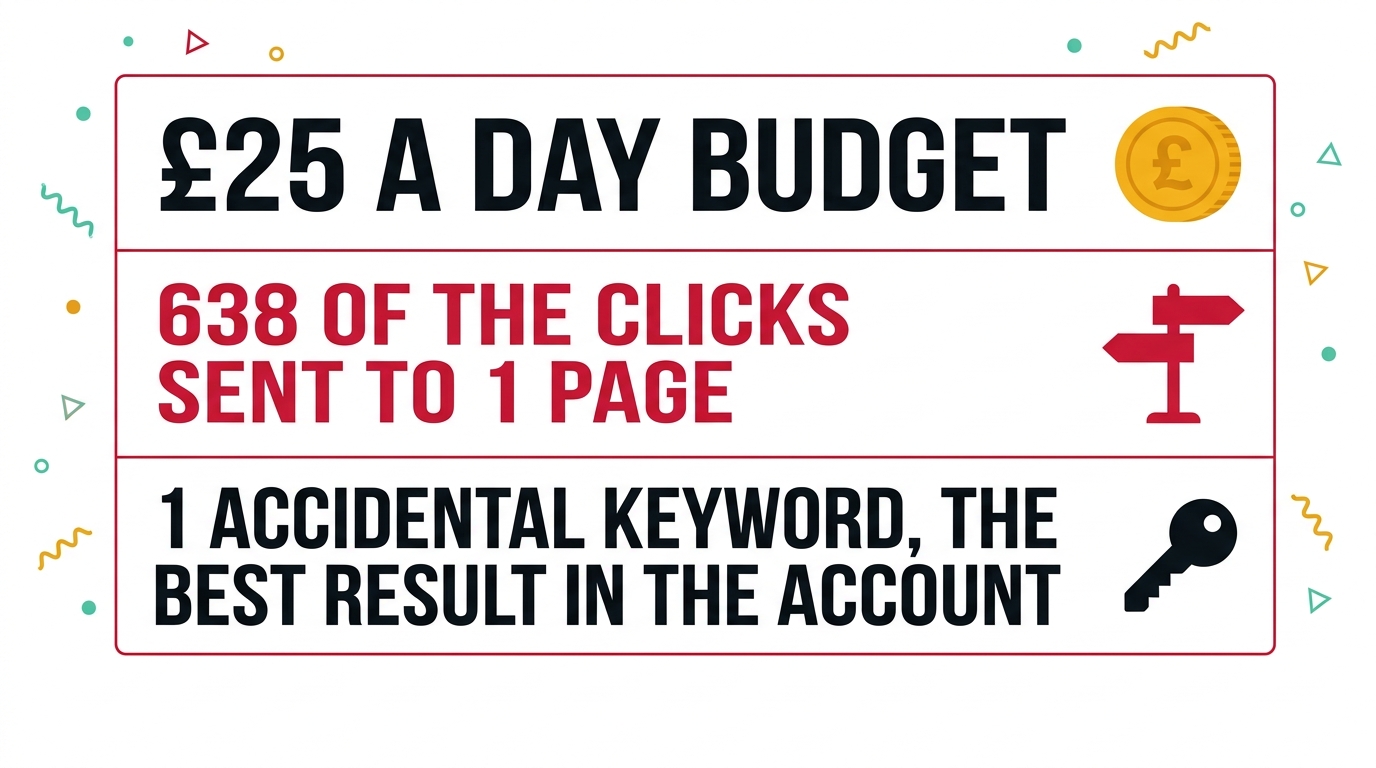
Most cities were spending around £25 a day. That is not a lot of room to make mistakes in.
The dashboard looked busy. It showed close to 6,900 conversions recorded across the account’s life.
Almost none of that number meant what it looked like it meant.
Why a £25 budget needs more precision, not less
Every one of those city campaigns had Google’s AI Max setting switched on. It is built to find more of the right searches and the right page automatically.
On a big budget, that can work. There is enough traffic and enough data for the system to learn something real.
On a £25-a-day budget, each city campaign behaves more like a single tiny advertiser than part of something larger. There is barely enough traffic for the algorithm to learn anything at all.
Hand that advertiser automatic keyword matching and automatic page selection, and it does not get smarter with scale. It gets confused faster, on a budget that cannot absorb the mistake.
The page picked for nearly everybody
One city campaign made the problem obvious. It had 2 ads running, pointing at 2 different landing pages: one for general personal training, one for online-only coaching.
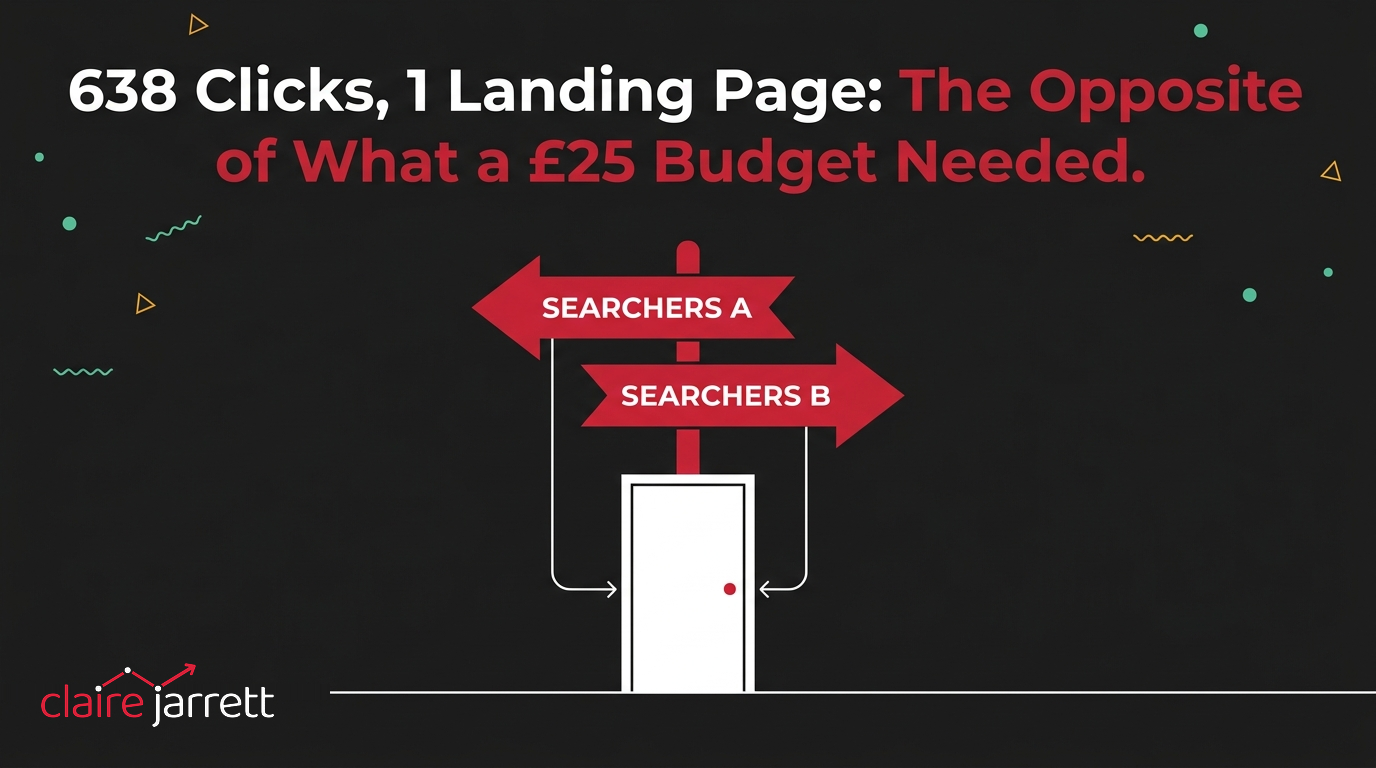
638 of the clicks that campaign received landed on the online-coaching page. That page converted a little better, so Google kept sending it almost everybody, including people who had searched for a trainer they could meet in person.
A £25-a-day budget needs more precision than a £2,500 one, not less. AI Max gave it less.
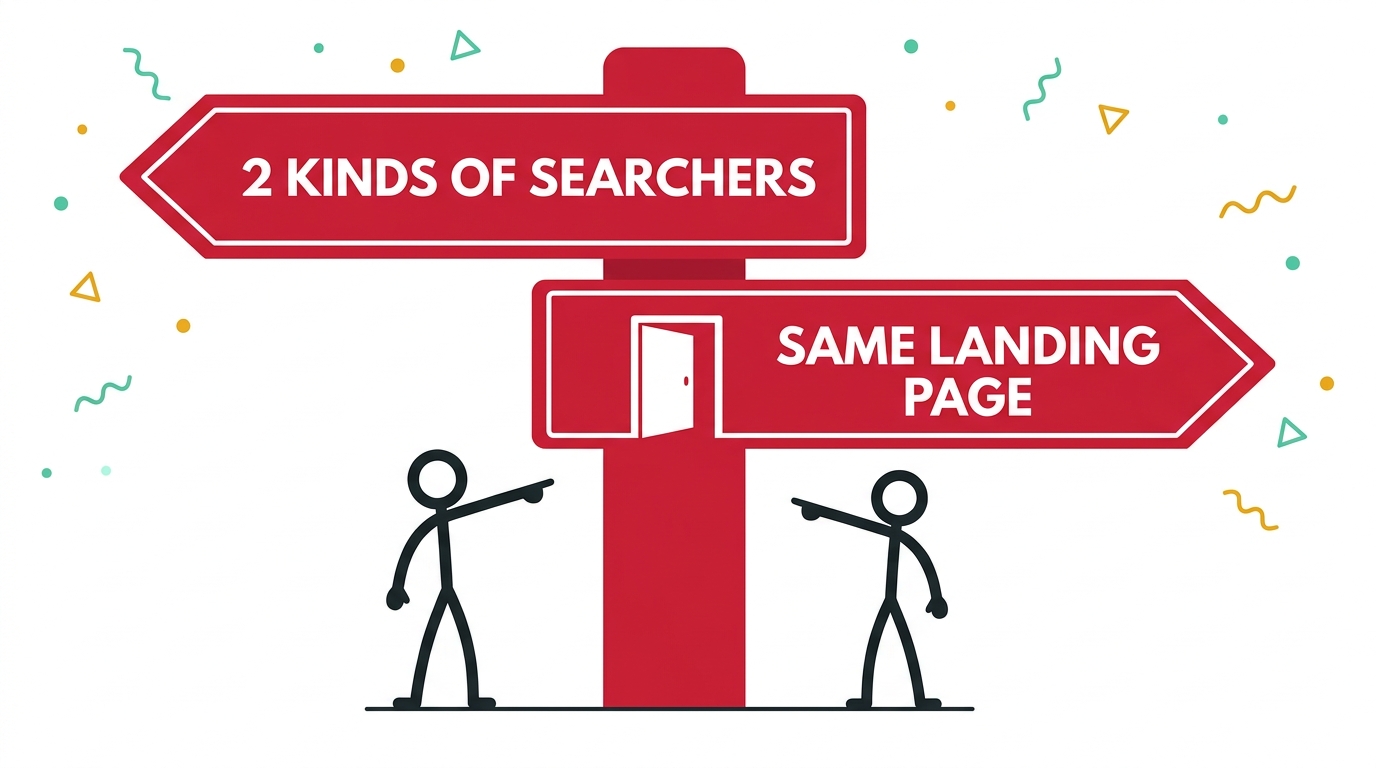
Someone who wants an in-person trainer, and lands on a page selling online-only coaching, is not a bad lead. They are the right person shown the wrong offer.
How to check your own account for this
- Open the landing page report for each campaign. If 1 URL is getting most of the clicks regardless of ad group or keyword, Google has picked a favourite, and it may not be picking it for the reasons you’d choose.
- Compare match types across the account. An account that is almost entirely exact match, with hundreds of negative exact keywords added one at a time, is usually chasing the same handful of mismatches on repeat rather than fixing the setting causing them.
What the conversions were actually counting
The £25-a-day cities were tracking bookings, but also phone calls, counted every time the phone rang rather than once per person.
One ad group showed 4 clicks and 3 conversions in the same week. That is unlikely to be 3 different people. It is far more likely 1 person, clicking back in across several sessions, counted as 3 separate wins.
- Check whether a call is counted once or every time it happens. A returning enquirer rings back twice, and the account quietly books that as 2 fresh leads instead of 1 undecided one.
- Ask what a real booking is actually worth, and whether that value ever reached Google. The account had packages priced at £45 for a single session and £900 for a 12-week transformation programme, and neither value was attached to a conversion. Google had no idea which bookings were worth chasing.
One keyword in the account had been added by accident. Someone trying to add it as an exact match had misplaced a bracket, so it went in as broad match instead.
It became the best-converting keyword in the whole account. Not because broad match is good, but because, for once, Google was matching against what people had actually typed, rather than a page it had already picked for them.
The bigger point
None of this was a case of nobody being in the account. Someone had clearly been adding negative keywords, reacting to problems as they appeared, the same instinct behind the search-only tickbox that caught another account out.
The problem sat underneath all of that effort, not on top of it. A tool built to help an account scale had been switched on for 20-odd campaigns that were never going to scale, because each one only had £25 a day to spend.
Automation needs room to learn. Give it a tiny budget instead, and you don’t get a smaller version of the same help. You get a worse version of the account you’d have built yourself with phrase and exact match, and a landing page matched to the intent.
Any PPC consultant worth their fee should ask how much each part of your account is actually spending before they let Google choose anything automatically. I’d rather say that plainly than let 20 cities keep paying for the same fix over and over.
If you want to know whether your own account is making this choice for you, the audit checklist covers where to look first. You know where I am.
A few questions I get asked
Is AI Max always wrong for small budgets? Not always, but it needs enough conversions a month to learn from, and a £25-a-day city campaign rarely gets there. Below a certain volume, you are better off giving Google less room to guess, with phrase and exact match keywords pointed at a specific page.
How do I know if Google is picking the wrong landing page for me? Open the landing page report under each campaign and compare it against your ad groups and keywords. If 1 page is absorbing most of the clicks regardless of what was searched, that is Google’s choice, not a reflection of demand.
Should every location in a multi-site account share 1 budget instead? Not necessarily; local budgets can work well. The issue here was not the local split. It was handing automated targeting and automated page selection to campaigns too small to feed it properly.
Why did the accidental broad match keyword outperform the exact match ones? Because it was matching against what people were actually typing, not against a page Google had decided for them in advance. The match type matters less than what it is pointed at.
2 ways I can help you get this right
If you want to know whether your own account is letting Google pick a landing page you never chose, book a free call and we’ll go through it together.
If you’d rather learn to read these settings yourself before a tiny budget gets handed to full automation, my masterclass How to Overtake Your Top Google Ads Competitors in 8 Weeks walks through exactly that.

Claire Jarrett
Google Ads consultant since 2007, published author (6 books), and Google Partner. Claire was the first person to launch Google Ads training in Europe and has helped thousands of professional service businesses scale their leads.
More about Claire