She Ran Her Google Ads Through AI. Then She Hired a Human.
I had a call recently with a business owner who did something I’d love more people to do. Before she ever spoke to me, she connected her Google Ads account, her analytics and her search data to AI, and asked it to tell her what was going on. She’s not a marketer, and she’d be the first to say so. She’s a healthcare founder who decided AI was too important to ignore and taught herself to use it properly.
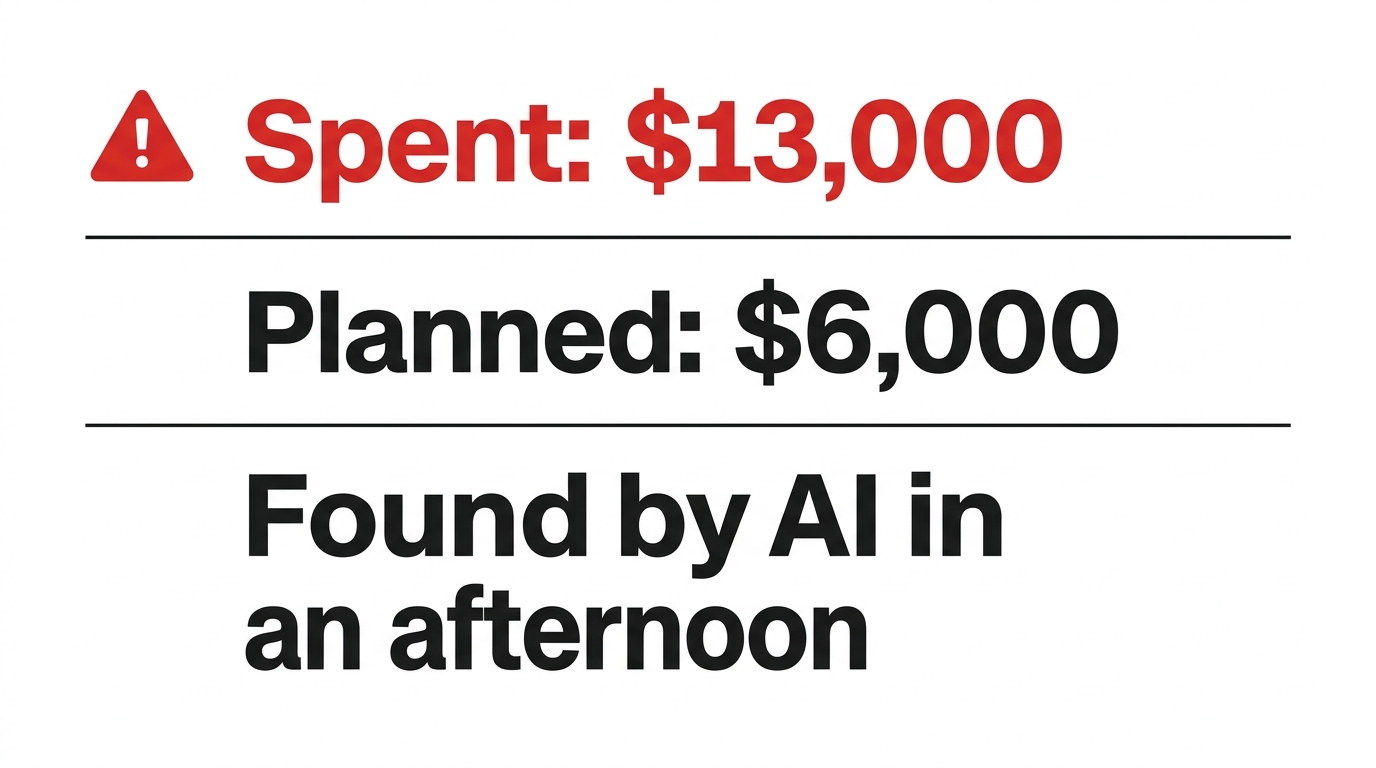
What it showed her was uncomfortable. Campaigns quietly eating $500 a month without producing a single lead. Spend that had drifted to roughly double what she’d agreed, about $13,000 in a month instead of the planned $6,000. Nobody had flagged any of it. As she put it to me, the one thing she understood 100% was how much had been charged to the credit card.
So here’s an owner with a frontier AI model reading her entire account and finding real waste nobody had mentioned. And what did she do next? She hired a human.
”AI is only as good as the prompter”
That’s her line, not mine, and it’s the sharpest summary of the situation I’ve heard all year.
She could see the problems. What she couldn’t know was which questions she hadn’t asked. She isn’t a marketer, so she doesn’t know what a good account looks like, which meant the AI would answer everything she asked and could never tell her what she should have asked instead. Her business partner’s suggestion was to skip the specialist and run the ads themselves with AI. She refused, and her reason was the phrase I keep thinking about. Everything she’d seen offered that way was, in her words, AI without the human.
What the AI genuinely got right
I want to be fair here, because it did a lot, and it did it in minutes.
- It read the whole account, every campaign, something a busy owner never actually sits down and does.
- It found the dead spend: real budgets going out of the door month after month with 0 leads coming back.
- It compared what was charged with what was agreed, which is how the runaway spend finally became visible.
- It gave her the evidence to stop trusting the reports and start asking harder questions.
That last one matters most. I’d far rather sit down with an owner who has run her own account through AI than one who hasn’t. She arrived knowing something was wrong, with numbers in hand. That saved us both weeks of persuasion.
Where it stopped
Reading an account and rebuilding one are different jobs.
The AI couldn’t say what the account should look like instead, because structure is judgement, and judgement is precisely what it doesn’t have. It couldn’t tell her whether the conversion numbers it was reading were even real, and as I showed in an account where the dashboard said 56 leads and the real number was 4, that’s not a small risk. It answered what it was asked, took what it found at face value, and moved on.
And it can’t take responsibility. When the spend runs away, “the AI didn’t catch it” is not an answer anyone can accept, which is why the human it reports to matters more than the tool.
I use AI every day. That’s exactly why I know where the line is.
None of this is a sceptic talking. AI runs right through my own work: it helps me prepare audits, it drafts negative keyword lists for a human to approve, and I’ve had clients point their own AI at a several-thousand-row keyword spreadsheet and categorise it in an afternoon, faster than any of us could by hand. These days I build AI systems for other businesses as well: chatbots, voice answering and follow-up systems that reply to an enquiry in seconds, front of house, where AI genuinely earns its keep.
In fact, AI is starting to send me work. One recent enquiry told me she’d found me through her ChatGPT research rather than Google. The tools aren’t the enemy. Handed the wrong job, they build the same cheap account everyone else has. Handed the right one, they’re the hardest-working member of staff you’ll ever have.
The question to ask whoever runs your ads
On that call she asked me, straight out, how my team and I work with AI. It’s the right question, and in 2026 I’d ask it of anyone before handing them an ad budget.
What you want back is specifics, not reassurance:
- What do you use AI for, exactly? Good answers sound like analysis, drafting and reporting. Vague answers (“we use the latest AI tools”) usually mean the machine is unsupervised.
- What stays human? You’re listening for structure, budgets, and the judgement calls. If nothing stays human, you’ve found the death spiral with a sales page.
- Show me the change history. Your Google Ads account records every change anyone makes. Real management leaves fingerprints, week in, week out. No tool can fake that screen, and 2 minutes looking at it tells you more than any report.
The bigger point
A person with AI beats AI alone, and it beats a person alone. The owners who do best over the next few years will look like her: fluent enough with AI to check what they’re being told, and clear-eyed enough to know that checking is not the same as fixing. The expertise didn’t get less valuable because AI arrived. It got easier to verify, which is bad news only for the people who never had it.
If you’ve run your own account through AI and you don’t like what it found, that’s exactly the right moment to talk to a Google Ads consultant or, if your spend runs across more than one platform, a PPC consultant. Bring the AI’s findings with you. I’ll tell you which ones matter, which ones don’t, and what I’d do about them. You know where I am.
A few questions I get asked
Can I audit my own Google Ads account with AI? Yes, and I’d encourage it. Ask it to list every campaign with its spend and its real leads, to compare this month’s charges with what you agreed, and to read out what each conversion action actually measures. It will find the obvious waste quickly. What it won’t tell you is what a well-built account for your business looks like, because it has never seen one next to yours.
Will AI replace Google Ads agencies? It’s already replacing the ones that were quietly doing nothing, because owners can now see the nothing for themselves. What it doesn’t replace is the judgement about structure, budgets and targets, and someone taking responsibility for the result. The bar for charging a management fee just went up, which I think is excellent news.
How do you use AI in your own work? For analysis, preparation and drafting, with a human deciding everything that touches the account. And for the jobs it genuinely wins at: answering enquiries, chasing leads and booking appointments around the clock. The one thing it never does in my business is make unsupervised changes to a client’s campaigns.
What should I look for in an agency’s answer about AI? Specifics. Which tasks, which tools, what stays human, and what you’d see in the change history as evidence. Anyone who can’t answer in that level of detail is either not using AI at all, which is a waste, or letting it run unsupervised, which is worse.
2 ways I can help you get this right
If your own AI has told you something’s wrong with your account, book a free Google Ads call and I’ll go through it with you and tell you the truth about what I find.
Or register for my free masterclass, How to Overtake Your Top Google Ads Competitors in 8 Weeks, and I’ll walk you through the whole approach.

Claire Jarrett
Google Ads consultant since 2007, published author (6 books), and Google Partner. Claire was the first person to launch Google Ads training in Europe and has helped thousands of professional service businesses scale their leads.
More about Claire