Why I Want Your Cost Per Click to Go Up, Not Down
I audited an account recently for a business that sells digital signage and video wall installations to other businesses. Their average cost per click was 1 penny.
I told the owner that wasn’t good news. It was the whole problem.
A 1 penny click and a £5 click are not the same customer, cheaper
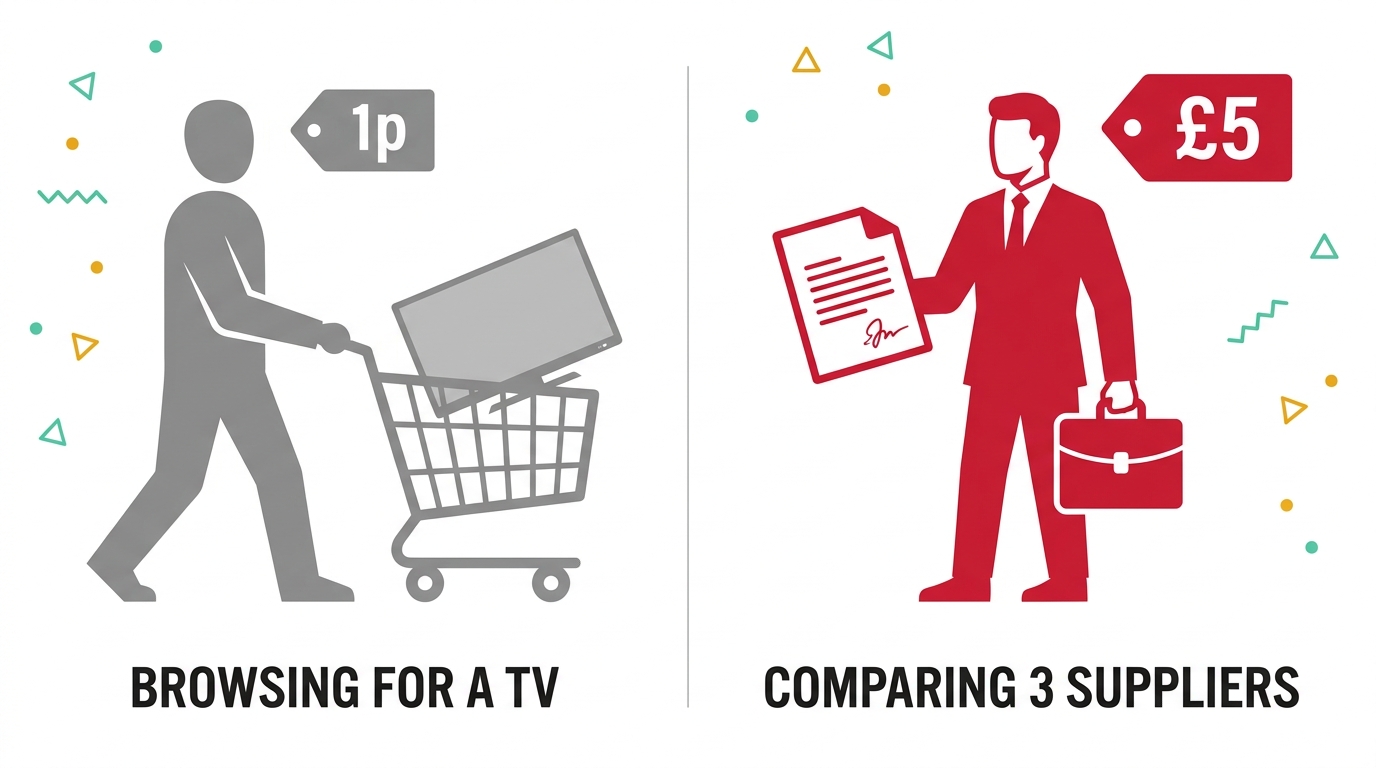
Here’s what nobody tells business owners when an agency reports back proudly on how cheap the clicks are. A 1 penny click and a £2 or £5 click aren’t 2 prices for the same person. They’re 2 different people entirely.
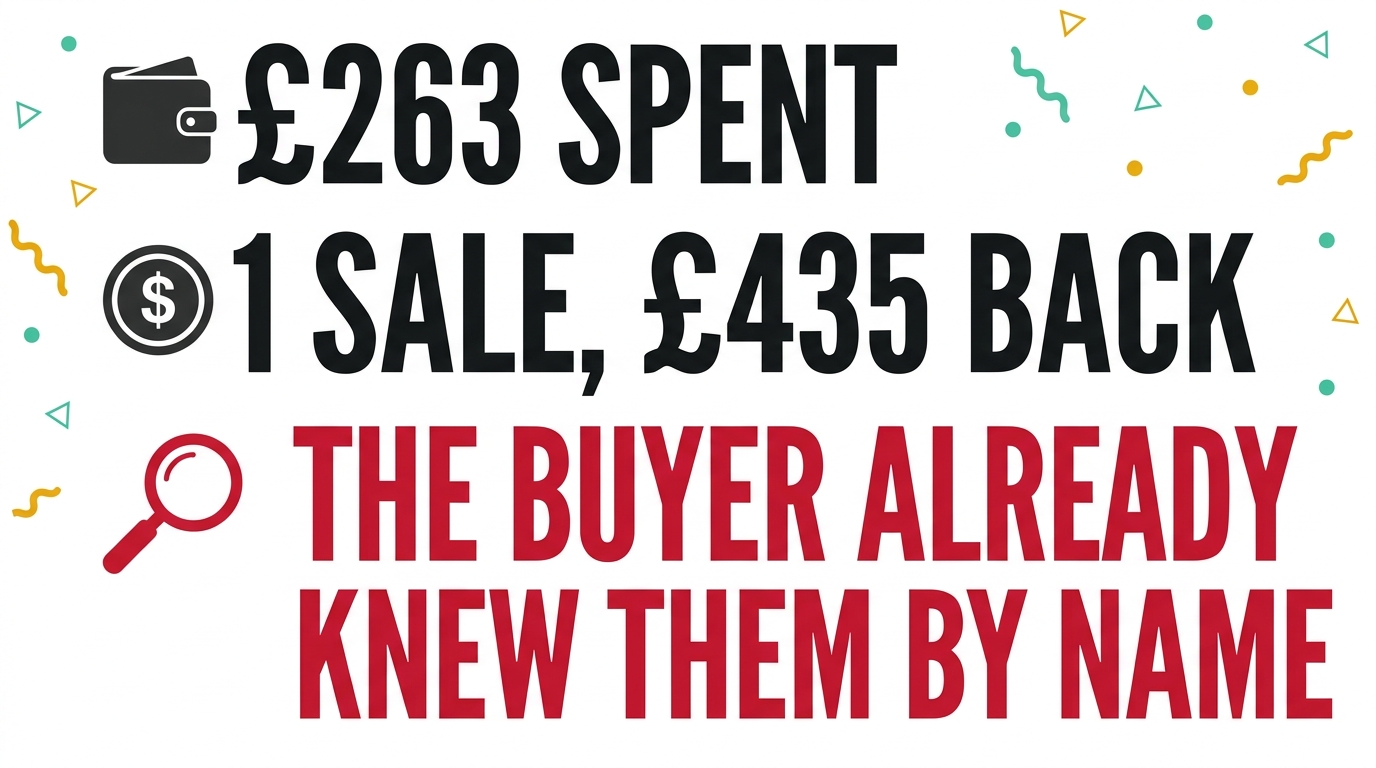
The account I was looking at was running Shopping and Performance Max campaigns built to chase the lowest possible cost per click. They were getting it: 1 penny here, 4 pence there, 25 pence on a good day. What they were actually buying was consumers browsing for a 50-inch outdoor TV and people searching how to design a restaurant menu. Not one business buyer in the mix. The account had had a single direct sale in the last 30 days, and when I checked, even that one customer had been looking for the business by name already. It wasn’t new business. It was zero, wearing a sale’s clothing.
Why the auction punishes the cheap version of your own product
This is the part that’s counterintuitive until you say it plainly. Google’s auction isn’t pricing your keyword. It’s pricing the intent behind the click. A business decision-maker searching for “video wall installation” and comparing 3 suppliers is worth real money to whoever’s bidding on that search, because that person is close to signing a contract. A consumer idly searching for a TV for their living room is worth almost nothing to anyone, because there’s no B2B sale on the other end of it.
So when a campaign is built to minimise cost per click, it doesn’t find you a bargain. It finds you the cheapest intent available, which is nearly always the wrong intent. I want the number of clicks in an account like this to go down. I want the cost per click to go up. That’s not me being reckless with someone’s budget. It’s me telling Google to stop competing for the audience nobody wants and start competing for the one that actually buys.
I want the number of clicks to go down. I want the click-through rate to go up. I want the cost to go up. Because that means we’re targeting the quality people.
The numbers back this up plainly. On the one sale the account did record, it cost £149 to get, generated £435 in that single instance, but £263 had gone out the door in total spend to produce it. That’s close to break-even on a good month, not a return, and it only happened because someone who already knew the business searched for it directly.
How to check whether your own account is chasing the wrong intent
You don’t need a specialist tool for this. It’s one of the first things I check on every audit I run, alongside the rest of the ultimate PPC audit checklist.
- Look at your search terms report, not your cost report. A cheap average cost per click looks like good news on a dashboard. It only tells you something useful once you read the actual searches that triggered it. If they’re consumer searches and you sell to businesses, or vice versa, the price was never the problem.
- Check which device your ad is showing on. A business buyer comparing installers for a contract worth thousands isn’t doing that research standing in a queue on their phone. If most of your impressions are on mobile and your customer is a business, ask why. It’s worth testing what happens when you exclude mobile entirely for that kind of purchase.
What good B2B targeting actually looks like
Once you’ve confirmed the account is chasing the wrong intent, the fix isn’t complicated. It’s just the opposite of what most cheap-click setups are built to do.
- Put your budget behind search, not shopping or display. Shopping and Performance Max campaigns are built to maximise volume, and volume is exactly what you don’t want when your buyer is a business, not a consumer. Search ads let you target the specific, expensive keywords a real decision-maker actually types.
- Let the cost per click rise on purpose. If your genuinely qualified searches cost £2 to £5 and you’re paying 1 penny, you’re not in the auction those buyers are in. Raising your bid isn’t overspending. It’s showing up where the real competition already is.
It’s the same lesson underneath why a $10 a day budget was never going to work for a landscaper chasing $1 clicks: cheap clicks aren’t a discount version of the real thing. They’re a different, worse auction, and no amount of budget fixes the wrong auction.
The bigger point
Nobody sets out to build an account that only attracts the wrong customer. It happens because “lower cost per click” sounds like a win on a report, and reports rarely explain the difference between a cheap click and the right one. The business I audited wasn’t being cheated. The account was doing exactly what it had been told to do: get the cost down. It just hadn’t been told what that would cost it in return.
If your own reports proudly show a falling cost per click, that’s worth a second look before you celebrate it, not after. Check who’s actually clicking, not just what it costs. If you’d like a second pair of eyes on it, whether that’s a full audit or a straight conversation with a Google Ads consultant who’ll read your search terms line by line, that’s exactly what I’m here for. You know where I am.
A few questions I get asked
Isn’t a lower cost per click always a good thing? No, not on its own. Cost per click only tells you what you paid, never who you paid to reach. A falling cost per click paired with the wrong searches showing up in your search terms report is a warning sign, not a win.
How do I know if my account is chasing the wrong intent? Read your actual search terms report, not just the summary numbers. If the searches triggering your ads don’t match what a genuine buyer would type, the account is optimising for cheap availability, not quality.
Should I really want to pay more per click? Not more for its own sake. You want to pay whatever the real, qualified searches actually cost in your market, even if that’s several pounds a click. Paying less than that usually means you’re not in the auction your actual customers are in.
Does this only apply to B2B businesses? No. Any business whose real customer is specific, whether that’s a business buyer, a consumer making a big purchase, or someone with an urgent need, faces the same risk. Optimising purely for cheap clicks nearly always finds you the browsers, not the buyers.
2 ways I can help you get this right
If you’d like to know whether your own account is chasing cheap clicks instead of the right customer, book a free Google Ads call and I’ll go through your search terms with you.
Or register for my free masterclass, How to Overtake Your Top Google Ads Competitors in 8 Weeks, and I’ll walk you through the whole approach.

Claire Jarrett
Google Ads consultant since 2007, published author (6 books), and Google Partner. Claire was the first person to launch Google Ads training in Europe and has helped thousands of professional service businesses scale their leads.
More about Claire