10 Sales a Month From Google Ads, and Not 1 Was a Stranger
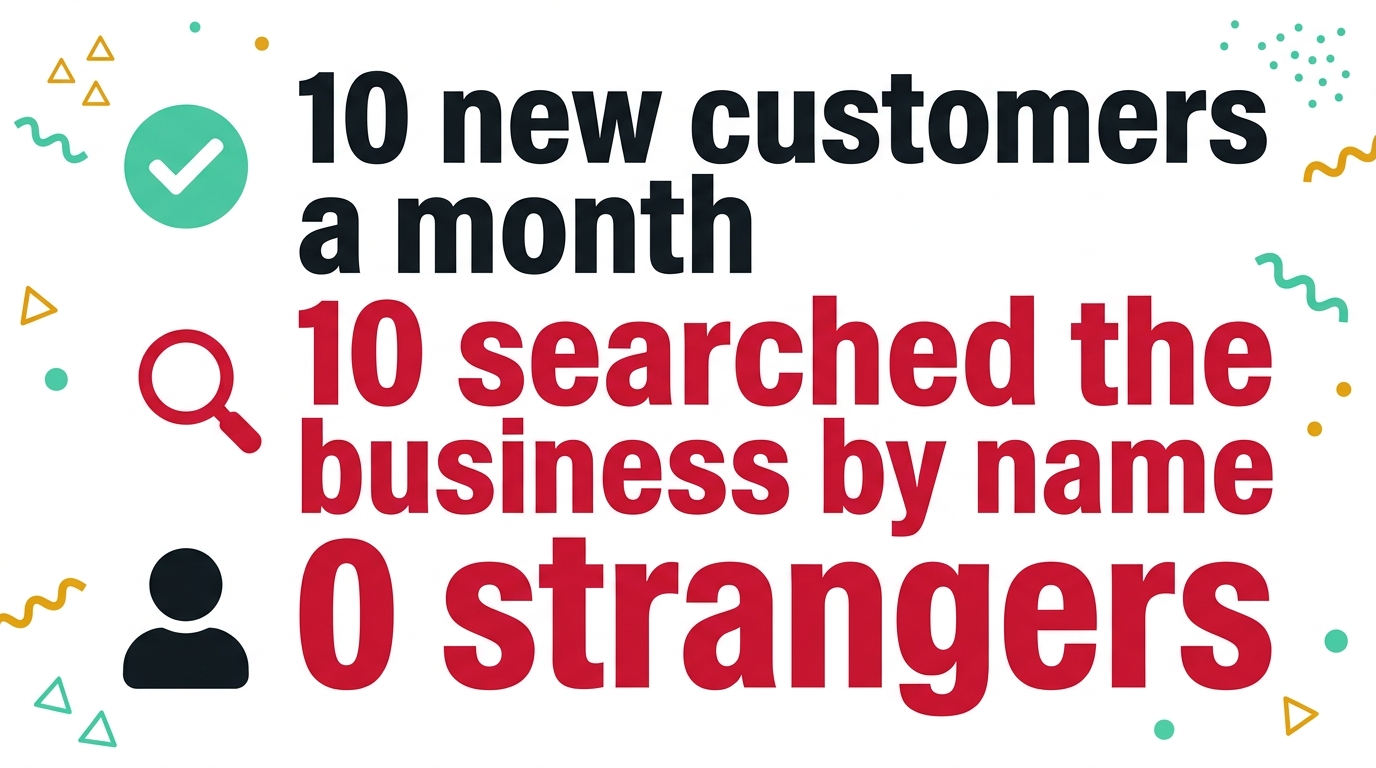
I had a call recently with the owner of a software company that sells practice-management tools to healthcare clinics. She told me Google Ads used to bring in about 10 new customers a month. Then she told me the rest of it, and the 10 stopped meaning what she thought it meant.
Every one of those 10 people had searched for the business by name.
Why a brand search dressed up as a stranger
Here’s the mechanism, and it’s a quiet one. When someone types your company’s name into Google and clicks your ad instead of the free listing right underneath it, Google Ads records that as a conversion. It looks identical in the dashboard to a conversion from someone who’d never heard of you and found you cold. Same green tick, same reported cost per lead, same “10 new customers this month” on the report.
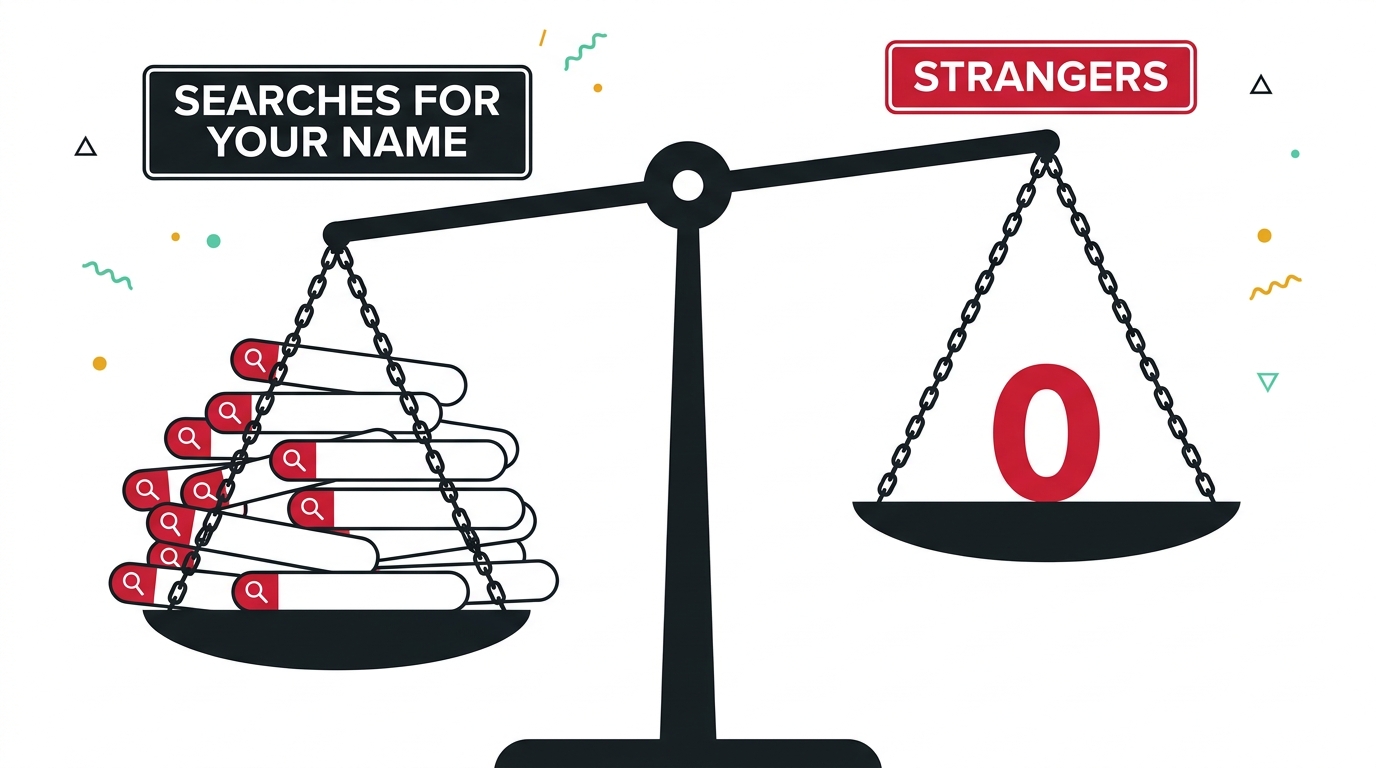
But they’re not the same customer. One already knew who you were before they searched. The other didn’t. An account can report a healthy month of conversions while quietly doing almost nothing to find anyone new, because the people converting were never strangers in the first place.
The business I spoke to had already worked this out themselves, which is rarer than it should be. As their marketing lead put it to me plainly:
If we take away the branded keywords, then it just kind of, like, all falls apart.
Why this stays invisible until someone asks the right question
Nobody built this account to hide behind brand search on purpose. It happens because the dashboard doesn’t distinguish intent, only outcome. A branded click and a cold click both say “conversion.” Nobody goes looking for the difference unless something forces them to, and usually what forces them to is a shrinking pipeline that the reports insist shouldn’t be shrinking.
In this case, the business had already tried an in-house hire and a UK agency before me, and both had reported reasonable-looking numbers without ever separating the 2. The business was also running Meta ads at the same time, picking up free-trial sign-ups at $18 to $25 each, alongside a period of Performance Max on Google that the marketing lead specifically flagged as where things went wrong. None of that tells you whether Google Ads itself is finding anyone new. It only tells you the account isn’t idle.
How to check whether your own conversions are strangers or brand searches
You don’t need anything beyond what’s already inside your account. It’s one of the first things I check on every audit I run.
- Pull your search terms report and separate anything containing your business name. Whatever’s left is your actual cold-traffic performance. If most of your reported conversions disappear once you remove brand terms, your real non-brand number is far lower than the dashboard suggests.
- Ask what happens to sales if you pause Google Ads entirely for 2 weeks. If your close rate barely moves, a meaningful share of what you thought Google Ads was generating was likely coming from people who’d have found you anyway, through search, referral or simply typing your name in directly.
What an account actually finding new customers looks like
Once you know which of your conversions are genuinely new, the fix is about separating and measuring, not throwing the whole account out.
- Split branded and non-branded search into their own campaigns. This lets you see, in real numbers, how much of your budget and your conversions belong to each. A branded campaign is cheap to run and worth keeping. It just isn’t the growth engine.
- Set your target cost per acquisition using only non-brand data. If the business I spoke to wants a $1,000 cost per new customer, that number needs to be built from what a genuine cold conversion actually costs, not blended with the far cheaper branded ones dragging the average down.
It’s the same underlying problem as an agency quietly ending up as the owner of your own Google Ads account: the account keeps running, the numbers keep looking fine, and nobody finds out anything was wrong until they go looking for something specific.
The bigger point
Nobody sets out to build a Google Ads account that mostly serves people who already knew the business. It happens because a conversion is a conversion on the dashboard, and nobody has a reason to ask who was behind it until growth stalls and the reports say it shouldn’t have. The business I spoke to hadn’t been cheated by a bad agency or a lazy hire. The account had simply never been asked the 1 question that mattered: who are these 10 people, really?
If your own reports show a steady stream of Google Ads conversions, it’s worth pulling the search terms behind them before you credit the campaign for finding you a single new customer. If you’d like a second pair of eyes on it, whether that’s a full audit or a conversation with a Google Ads consultant who’ll separate your brand traffic from the rest, that’s exactly what I’m here for. You know where I am.
A few questions I get asked
How do I know if my Google Ads conversions are really new customers? Pull your search terms report and pull out anything that contains your business name or close variations of it. What’s left is your genuine non-brand performance. Most businesses have never looked at this split.
Is bidding on my own brand name a waste of money? Not necessarily, it can protect you from competitors bidding on your name and it’s usually cheap. The problem isn’t running a branded campaign, it’s counting its conversions as proof that your non-brand strategy is working when it isn’t.
Why didn’t my previous agency or hire flag this? Because the dashboard doesn’t separate it for you by default, and building the split takes a deliberate decision to go and check, not something that happens by accident while managing day-to-day spend.
Does this only affect software or B2B companies? No. Any business with any existing name recognition, whether from referrals, past customers or years of trading, will see some branded search volume. The risk is the same everywhere: mistaking people who already knew you for people your advertising found.
2 ways I can help you get this right
If you want to know how much of your own Google Ads performance is genuinely new business versus your own brand name coming back to you, book a free Google Ads call and I’ll go through your search terms with you.
Or register for my free masterclass, How to Overtake Your Top Google Ads Competitors in 8 Weeks, and I’ll walk you through the whole approach.

Claire Jarrett
Google Ads consultant since 2007, published author (6 books), and Google Partner. Claire was the first person to launch Google Ads training in Europe and has helped thousands of professional service businesses scale their leads.
More about Claire