The Sale That Cost $4 in 2019 Costs $28 Now
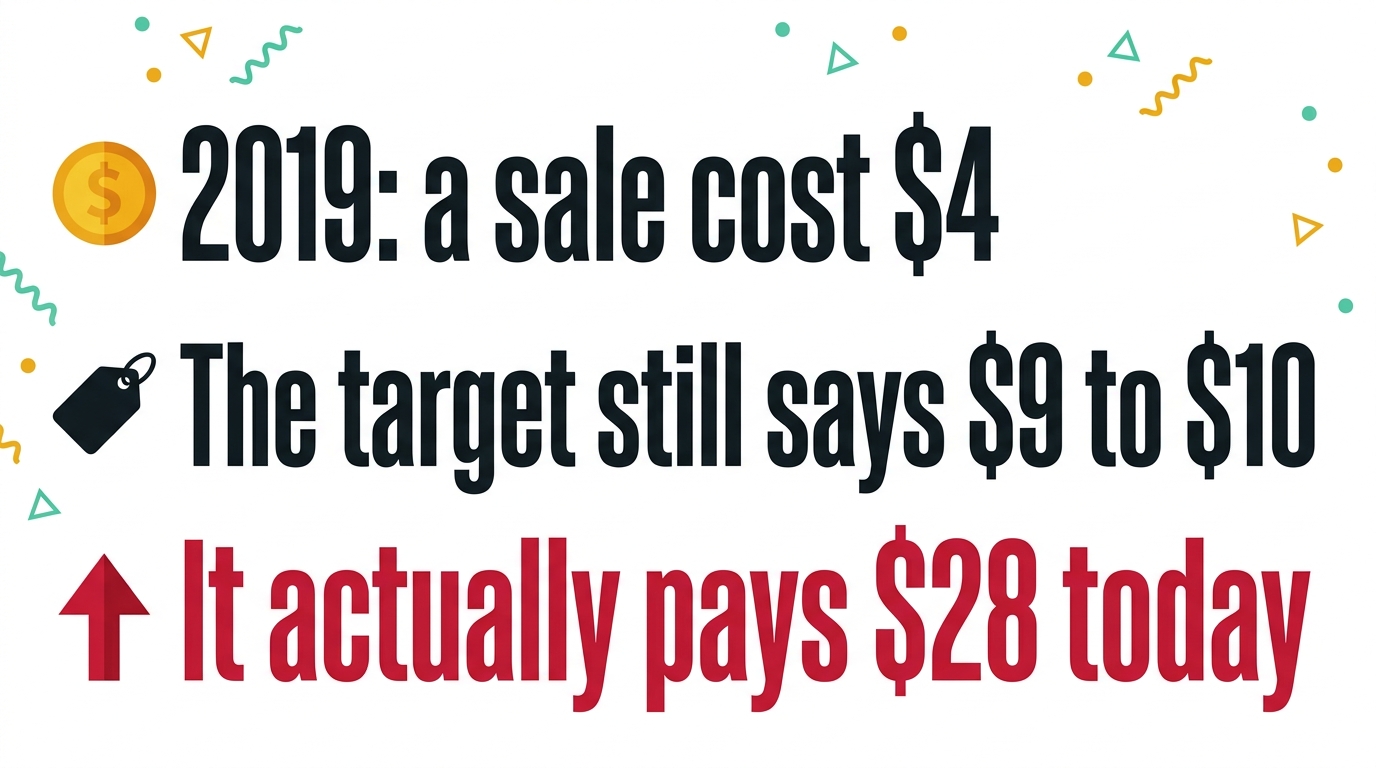
I audited an account recently for a business that sells health insurance to international students and visa holders in the US. Back in 2019, before the pandemic reshaped their market, one of their best keywords was converting at $4 a sale. When I opened the account this year, that same account was still telling Google it wanted to pay about $9 to $10 for a sale.
It was actually paying $28.
Why an account keeps quoting a price the market left behind
Every Google Ads account has a number in it somewhere, a target cost per acquisition, a target return on ad spend, that was set at a point in time. It’s rarely revisited unless something forces the question. Meanwhile the auction itself never stands still. More businesses compete for the same searches every year, automated bidding gets more sophisticated at extracting value from advertisers, and the price of a click that cost cents when an account was first built can cost tens of pounds today in a market that’s matured around it. A keyword doesn’t send you a memo when it gets more expensive. The bidding target just quietly stops matching reality.
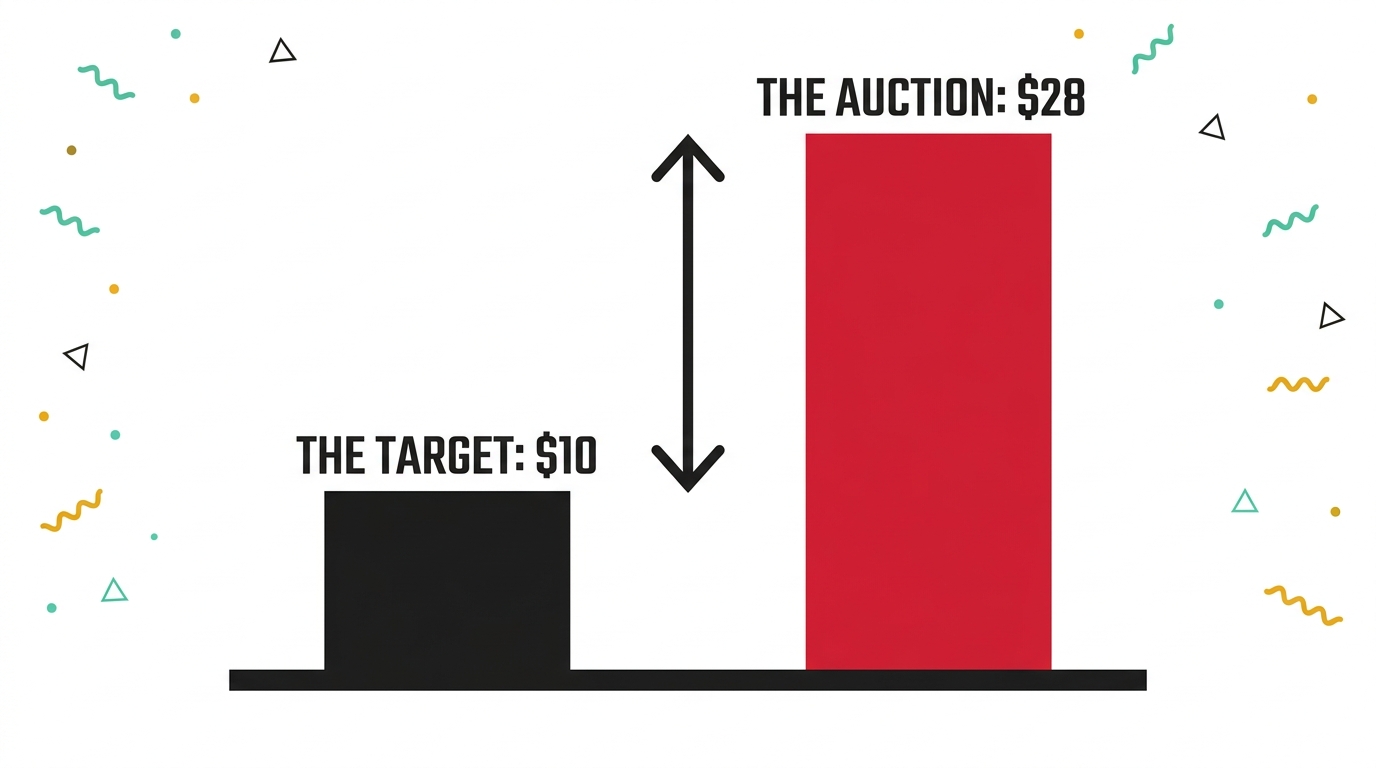
That’s exactly what had happened here. The account was still set to a target of $9 to $10, built from a market that no longer existed, while actually paying close to 3 times that for every sale it managed to get.
What happens when the target and the reality stop matching
This isn’t a small mismatch that corrects itself. When an account is told to pay $10 for something the auction now genuinely prices at $28, Google’s automated bidding doesn’t find you a bargain. It simply can’t compete for the volume it’s being asked to deliver, so it either starts serving worse traffic to hit the number on paper, or it stops delivering meaningfully at all.
You cannot do nothing, because if you do nothing, this account is going to get worse and worse. It’s just not going to spend your money.
The account had also drifted in a second way that made the first problem harder to see. Most of the sales it could actually point to were coming from people searching for the business by its own name, not from anyone newly discovering it. A target built years ago, chasing an auction that’s moved on, propped up by search volume that was never really “new” custom to begin with, looks like a functioning account right up until you ask it to prove where its growth is coming from.
How to check if your own account is still pricing for yesterday
You don’t need anything beyond your own account settings and your last 30 days of results. It’s one of the checks I run on every audit, alongside the rest of the ultimate PPC audit checklist.
- Find your target CPA or target ROAS and find out when it was last changed. If nobody can tell you, or if the answer is “years ago”, treat that number as suspect regardless of how the account is currently performing.
- Compare that target against what you’re actually paying per conversion right now. A gap of a few percent is normal drift. A gap where you’re paying double or triple the target is a sign the account is trying to buy 2019’s auction with a 2019 price, and losing.
What an account priced for today actually looks like
Once you’ve found the gap, the fix isn’t to panic and slash spend. It’s to bring the number back in line with reality and rebuild from there.
- Reset the target to what the account is genuinely achieving now, not what it used to achieve. A higher honest target that Google can actually hit will outperform a lower nostalgic one that quietly throttles the account instead.
- Separate brand search from the rest before you judge whether the new target is working. If a chunk of your conversions are coming from your own name, as they were here, your real non-brand cost per acquisition is higher again than the blended number suggests, and that’s the figure the new target needs to be built on.
It’s the same lesson underneath why I want a client’s cost per click to go up, not down: the price of the right customer is whatever the market currently charges for them, not whatever it charged when someone last looked.
The bigger point
Nobody sets a target CPA intending to leave it untouched for years while the market moves on without it. It happens because the number worked once, and an account that’s still technically running gives nobody a reason to go back and question a setting that was correct when it was made. The business I audited hadn’t done anything wrong when they set that target. The market had simply moved 3 times past it, and nobody had gone back to check.
If you can’t remember the last time you looked at your own target CPA or target ROAS, that’s worth 10 minutes this week, before the gap between what you’re asking for and what the auction now costs gets any wider. If you’d like a second pair of eyes on it, whether that’s a full audit or a conversation with a PPC consultant who’ll pull the real numbers apart from the brand-inflated ones, that’s exactly what I’m here for. You know where I am.
A few questions I get asked
How often should a target CPA or target ROAS be reviewed? At minimum every few months, and immediately after any big shift in your market or competition. A target is a snapshot of a moment in the auction, not a permanent setting.
Why doesn’t Google just tell me my target is unrealistic? It will, indirectly, by under-delivering or serving worse traffic to try to hit the number. Google doesn’t flag the target as wrong. It just quietly fails to spend your budget properly against it.
Is a big gap between target and actual cost always a bad sign? Yes, in either direction. Paying far more than your target means the account is straining to compete. Paying far less usually means you’re not reaching the customers who’d actually convert, similar to chasing a cost per click that’s too cheap to be the right customer.
Does this only happen to older accounts? No, though it’s more common in them. Any account can end up with a stale target if nobody revisits it after the market shifts, whether that account is 1 year old or 10.
2 ways I can help you get this right
If you’re not sure whether your own target CPA or target ROAS still matches what the auction actually charges, book a free Google Ads call and I’ll go through the numbers with you.
Or register for my free masterclass, How to Overtake Your Top Google Ads Competitors in 8 Weeks, and I’ll walk you through the whole approach.

Claire Jarrett
Google Ads consultant since 2007, published author (6 books), and Google Partner. Claire was the first person to launch Google Ads training in Europe and has helped thousands of professional service businesses scale their leads.
More about Claire