A Client Was Worth $180,000 Over Time. That's Why $500 for the Right Lead Was Cheap.
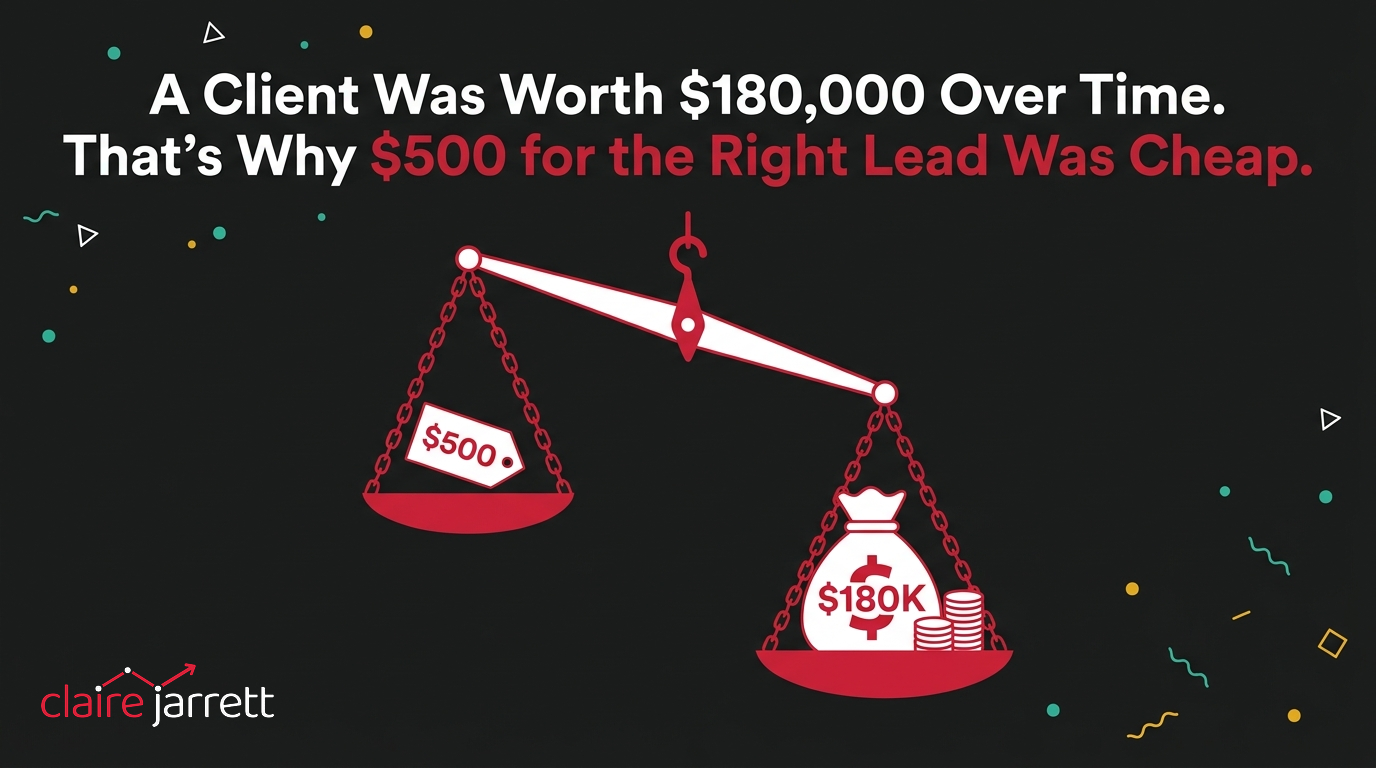
I had a call recently with the owner of a wealth management firm. He was looking at his Google Ads account and seeing an average cost of $180 a lead. He wanted to know why it felt so expensive for what he was actually getting back.
It was not expensive. It was the wrong number entirely.
Why the average on the dashboard hides the number that matters
When Google Ads reports an average cost per lead, it counts every single contact the same way. The person who filled in a form and turned out to be decades away from needing the service, with modest savings and no real fit, counts exactly the same as the person who was precisely who the business wanted to hear from. Blend those together and you get an average that describes neither of them properly. Once we separated out the enquiries that were duplicates, never actually connected by phone, or clearly the wrong fit before anyone had even called them back, the true cost of a genuinely qualified enquiry was closer to $500, not $180.
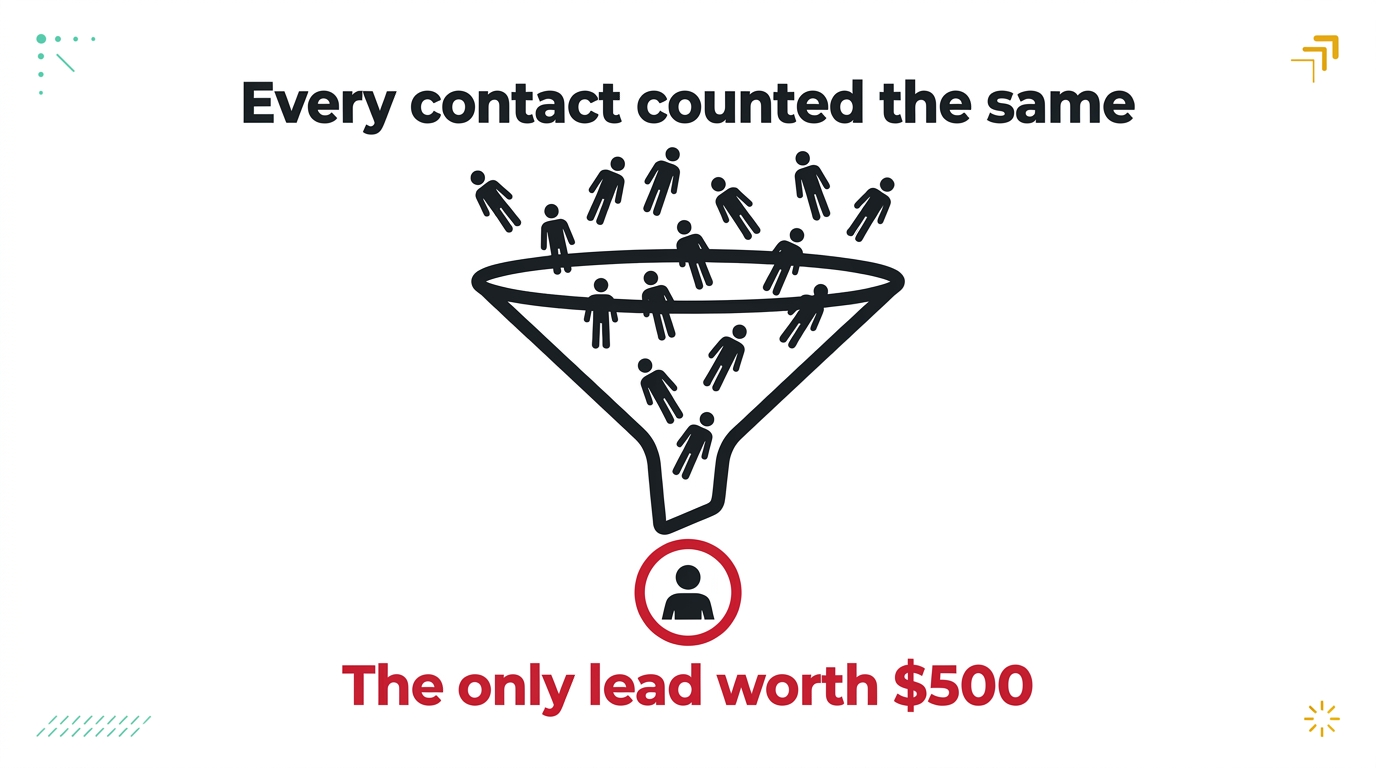
That is not a small correction. It is the difference between judging an account against the wrong benchmark entirely and judging it against the one that actually decides whether the business grows.
How to work out the number you should actually be willing to pay
Most business owners can tell you their cost per lead to the dollar. Very few have ever worked out what a client is genuinely worth to them, and that number is the only one that tells you whether $500 is expensive or cheap. In this case, a typical client was worth around $12,000 in the first year alone, and the firm’s own clients tended to stay for around 15 years. That puts a genuine lifetime value on a single client at somewhere around $180,000.
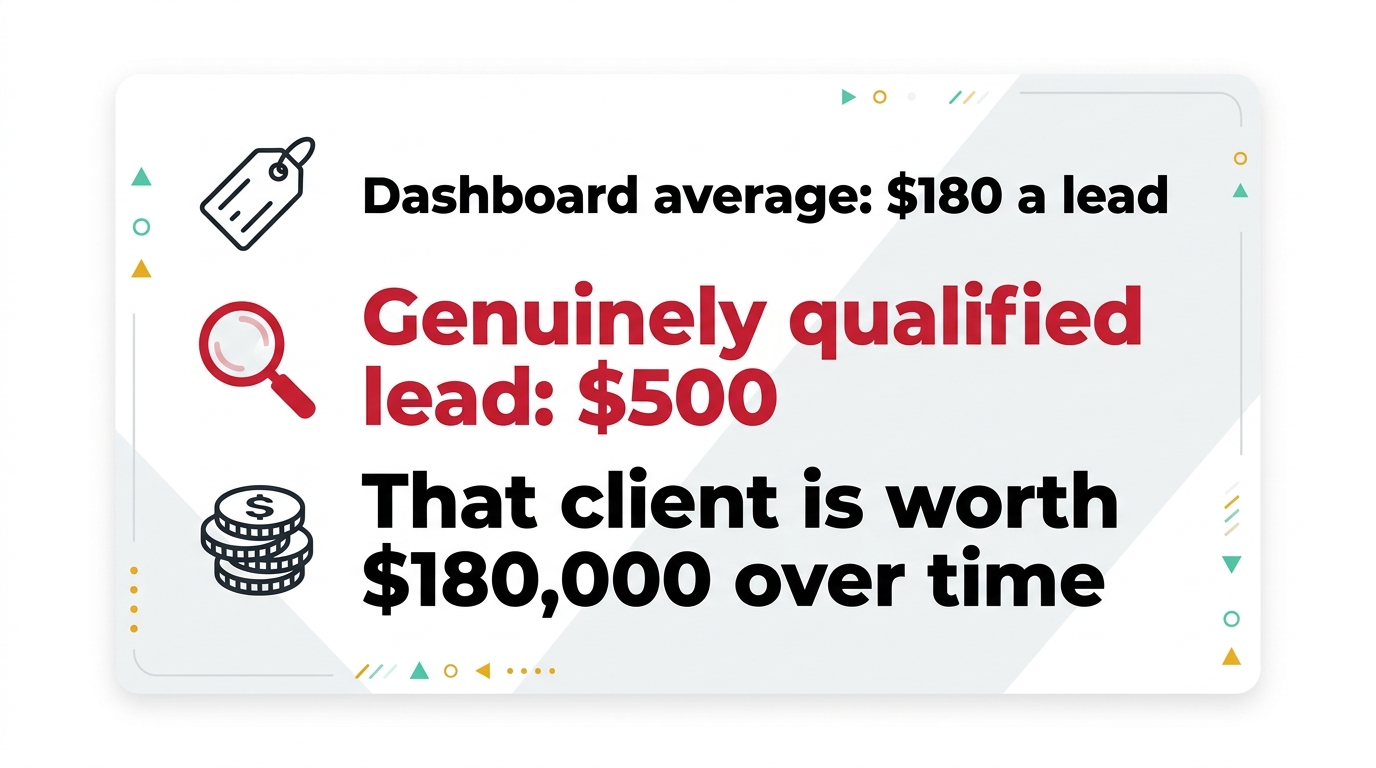
Once you know that number, the question changes completely. It stops being “is $500 a lot for a lead” and becomes “how much of that $180,000 am I willing to spend to acquire it in the first place.”
A client worth $180,000 to your business over 15 years is not expensive to acquire at $500 a lead. He is cheap. The mistake is judging that lead against the average on the dashboard, not against what he is actually worth.
How to calculate your own ceiling
- Work out what an average client is worth to you in the first year, and how long they typically stay. Multiply those together for a rough lifetime value. Most business owners have never actually done this sum. They know their cost per lead. They do not know what a client is worth, and without that, cost per lead is a number with nothing to compare it to.
- Decide how much of that first year’s value you are genuinely willing to spend to acquire 1 client, then divide by your close rate. If you are happy to spend around 6 months of a client’s first year value to win them, and you close 1 in 2 of your genuinely qualified leads, that gives you your real ceiling for a qualified lead, not whatever the dashboard happens to report.
What most accounts get wrong instead
- Treating every contact as the same conversion. A duplicate enquiry, a call that never connected and a genuinely qualified prospect all show up identically in a standard report unless somebody has gone in and separated them out by hand.
- Chasing a lower average cost per lead as though it is automatically good news. A cheaper average is very often cheaper because it is letting in more of the wrong people, the same trap sitting behind a cheap click that isn’t the buyer at all.
The bigger point
Most business owners look at their cost per lead in isolation and either panic or celebrate depending on whether it went up or down that month. Neither reaction means anything until you know what a genuinely qualified lead is actually worth to you, over the whole life of that client, not just the first invoice. Once this firm did the sum, $500 for the right lead stopped looking expensive and started looking like one of the better deals in the whole account.
It is the same blind spot behind 10 sales, 0 strangers, and behind a dashboard’s fake leads counted as though they were real enquiries. The number on the dashboard is never the number that matters. The number that matters is the one you have to go and calculate yourself.
If you have never worked out what a client is actually worth to your business over time, that is worth doing this week, before you make a decision about your ad spend based on the wrong number. If you would like a second pair of eyes on your own account, whether that is a full audit or a conversation with a Google Ads consultant who will help you find the real number first, that is exactly what I am here for. You know where I am.
A few questions I get asked
How do I find out what a client is actually worth to my business over time? Start with what an average client pays you in the first year, then find out how long clients typically stay with you. Multiply the 2 together for a rough lifetime value. It is a blunt number, but it is a far better starting point than the cost per lead on your Google Ads dashboard.
Isn’t a lower cost per lead always a good sign? Not on its own. A lower average very often means the account is letting in more unqualified people alongside the good ones, which drags the average down while doing nothing for the number that actually matters: how many of those leads become clients.
How do I separate genuinely qualified leads from the rest in my own reporting? That usually means someone on your team tagging each enquiry as qualified or not after the first conversation, and feeding that judgment back into how you assess the account, rather than relying on Google’s own conversion count, which cannot see who you actually spoke to.
What if I do not know my close rate? Then that is the first thing to find out before you set any ceiling on cost per lead. Look back over your last 20 or 30 genuinely qualified enquiries and see how many became paying clients. Without that number, any ceiling you set is a guess dressed up as a strategy.
2 ways I can help you get this right
If you’d like a free strategy call to talk through your account, book one here.
If you’d rather work through the process yourself first, my masterclass, How to Overtake Your Top Google Ads Competitors in 8 Weeks, walks through exactly this.

Claire Jarrett
Google Ads consultant since 2007, published author (6 books), and Google Partner. Claire was the first person to launch Google Ads training in Europe and has helped thousands of professional service businesses scale their leads.
More about Claire