291 Searches Off Target and 1 Old Ad Running in 41 Countries
My team had a call recently with the owner of a small HR consultancy who has paused her Google Ads. She helps small businesses with contracts, policies and difficult staff conversations, and she runs the whole thing on her own.
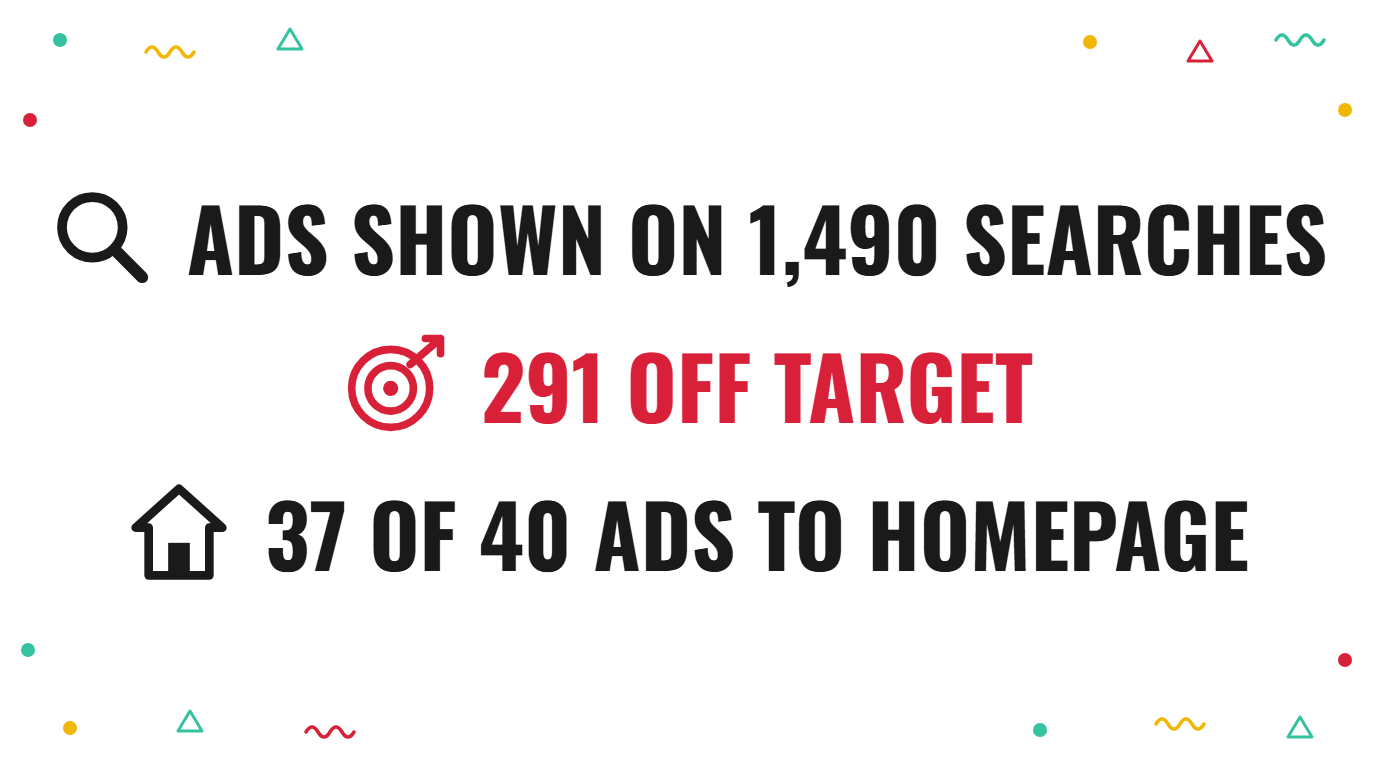
Ahead of the call, we looked at what her ads had actually been showing for. According to the research tools we use, her ads had appeared on about 1,490 different searches, and at least 291 of them didn’t fit what she does.
That is roughly 1 in 5, including searches for payroll software, free policy templates, HR job vacancies and salaries, and HR degree courses.
Why her ads showed on searches that don’t fit
She told us the ads used to work well. Back when it worked, about $1,000 of ad spend would bring back around $9,000 of work. Then the enquiries thinned out, and the ones that arrived weren’t the right kind of client.
She’d had a digital agency and then a freelancer look after the account. The freelancer put real effort in, and she could see the ads being rewritten. It still didn’t bring the bookings back.
I can’t tell you from the outside that this was the whole cause. What I can tell you is what that list of searches usually points to.
Google will happily show your ad to anyone whose search looks a bit like your keyword.
That is often how broad matching behaves. You bid on something sensible, and Google decides that “HR policy template” or “HR jobs near me” is close enough.
Nobody has to make a mistake for this to happen. It’s how the match type is designed to work, and unless somebody keeps adding negatives, the list of searches drifts further from your work every month.
If you’ve never added negatives, a beginner’s guide walks through how to start.
Why 37 of 40 ads going to the homepage costs you enquiries
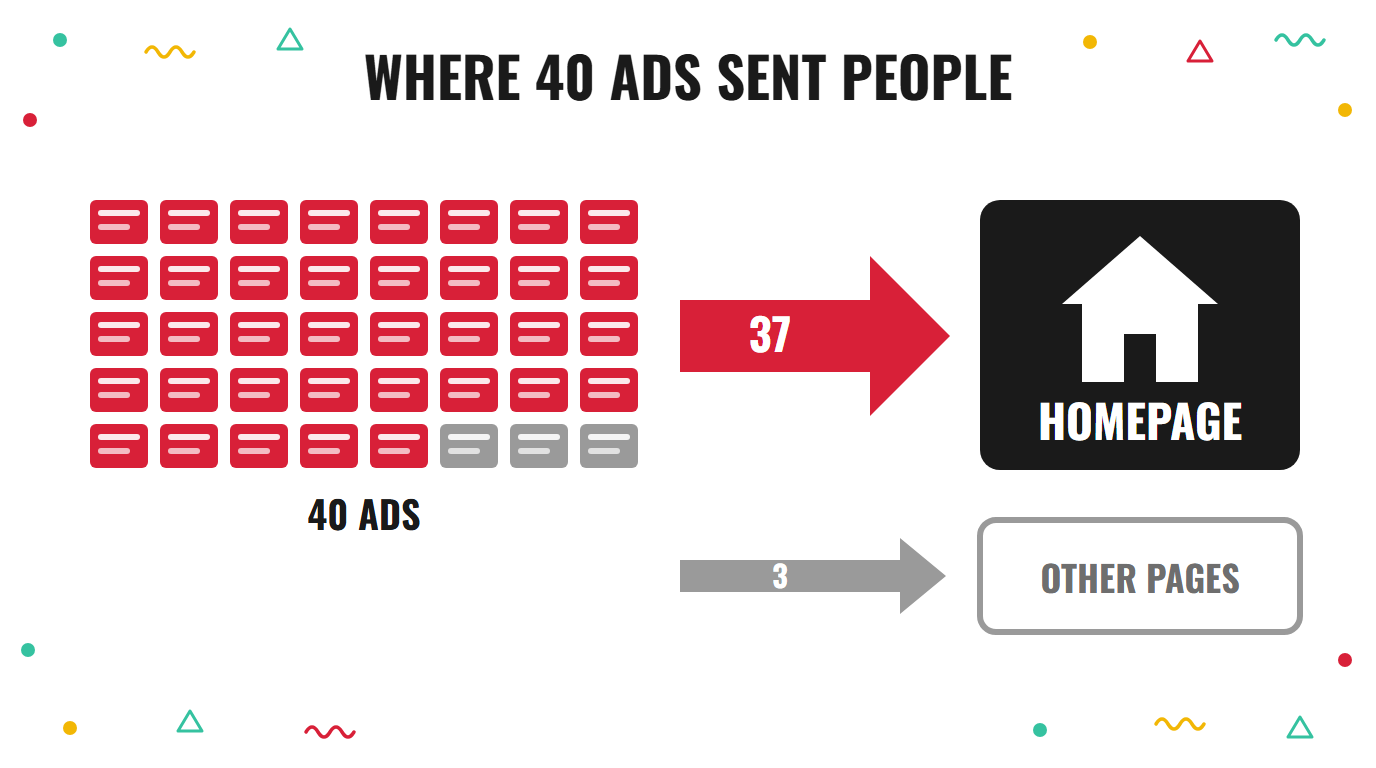
Of 40 ads we found recorded for her, 37 sent people to her homepage. Only 3 went to a separate page.
She had a reason, and it was a fair one. The homepage had converted better than her service pages, because it carries her background, her credentials and the businesses she has worked with.
I’d bet the service pages weren’t written for someone arriving from an ad. They need the same credibility, plus the exact thing the person searched for.
Think about the person who typed “employment contracts for a small business”. They land on a general homepage and have to work out for themselves whether that’s what you do.
Some will. A lot won’t. They go back and click the next ad.
I wrote about the same problem in 590 people clicked, where people clicked for one thing and were sold another. The click is paid for either way.
There’s a second cost. Google rates how well your ad and page match the search, so a page that doesn’t match can make each click more expensive.
Why 1 old ad could be shown in 41 countries
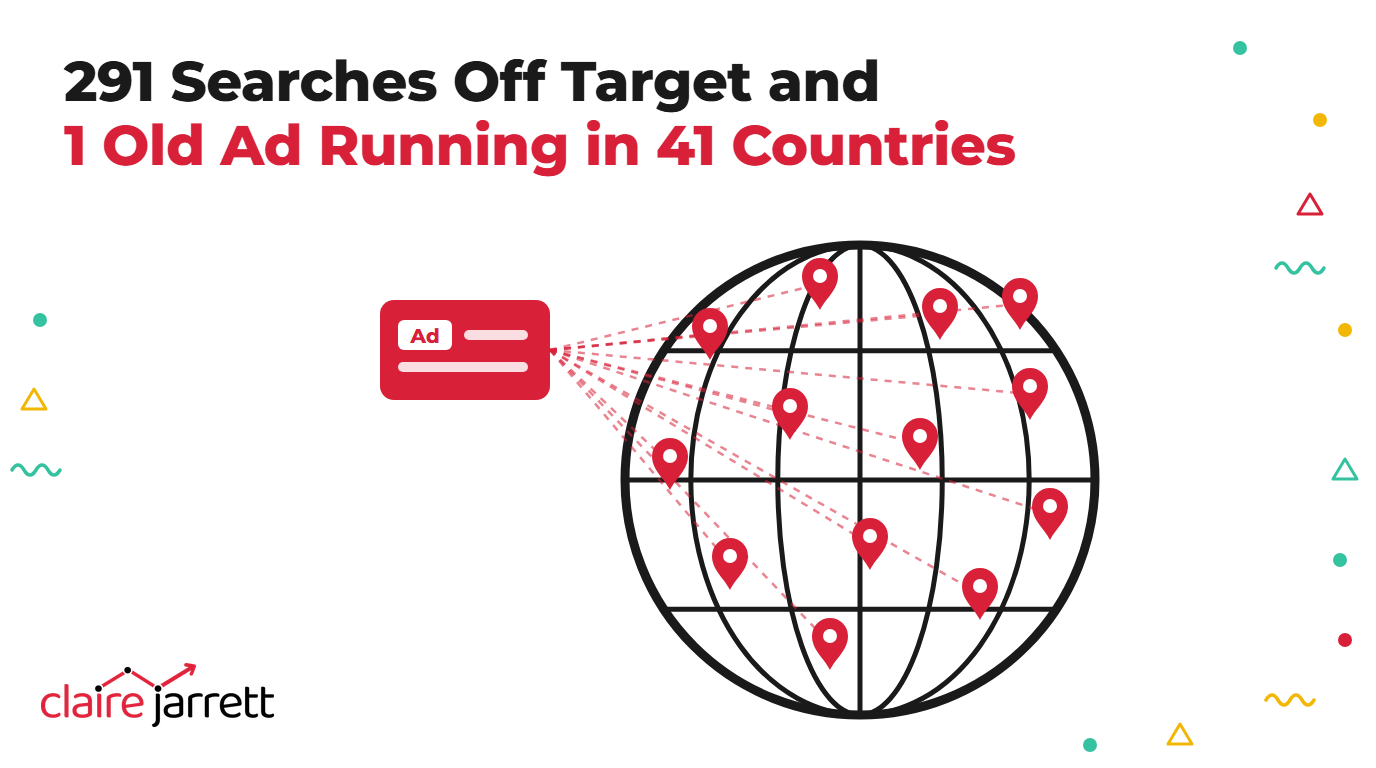
The strangest finding was a single ad that ran for about 3 years, until this spring. In that time it was shown in 41 different countries.
Her work is all in 1 market. This 1 ad reached far beyond it, including places she may never have meant to reach.
I can’t say how much of her budget it took. That’s something I’d need to see inside the account to know, and I wouldn’t guess.
There are 2 likely explanations. One is that Google’s location setting has more than one option.
The default includes people who are in your area, and also people who are merely interested in it. So someone on the other side of the world, searching for something that mentions your region, can still see your ad.
The other is that the targeting was simply set wide.
An old ad that never gets switched off makes it worse. Nobody looks at it because it was set up years ago, and it has always been there.
A wider location setting can be sensible. It’s a problem when nobody chose it.
How to check your own account for this
- Open your search terms report and read it. Sort by impressions for the last 90 days, and mark every search that isn’t something you’d happily take a call about. If you reach 1 in 5, broad matching is doing the choosing for you.
- Look at the final URL on each ad. If most of them point to your homepage, you have no way of telling which service is bringing in enquiries.
- Check the location settings for every campaign. Look for the option that includes people interested in a place, not only people in it, and ask whether you chose it.
- Look at when each ad was created. Anything that has been running for years without a review deserves a proper look before it spends another penny.
Signs the account has stopped being looked at
- The ads were rewritten, and nothing changed. Better wording can’t fix traffic that was never the right traffic.
- A competitor seems to be everywhere. She felt she was being out-shouted. That is worth checking against your impression share, not just guessing at.
- The enquiries are the wrong kind. She had a month with 3 bookings. 1 didn’t show up, and the other 2 weren’t the right client.
The bigger point
She had done plenty right. She’d got help, she knew enough to read the numbers, and she paused the spend rather than keep paying for it.
The search terms, the destination pages and the location settings are where a lot of accounts never get a second look.
Those are the same defaults I keep finding. They sit close to every wrong lead teaching Google to send you more of them.
A good Google Ads consultant should look at all of it before touching a single ad. It’s also why one forgotten word can cost so much.
If you’d like to see where your own account stands, the audit checklist covers where to look first. You know where I am.
A few questions I get asked
How many of my search terms should be off target? There’s no magic number, but 1 in 5 is a lot of paid clicks for the wrong people. I’d want it well under that, and I’d add negatives every week until it is.
Should every ad go to its own page? Where you offer different services, yes. A person who searches for a specific thing should land on a page about that thing, with your credentials on it as well.
Why would my ad show in other countries? Often the location setting includes people who are interested in your area, and not only people in it, though a wide targeting choice can do the same. Check the option under the location settings and choose the narrower one if you only serve 1 market.
Is it worth pausing ads when they stop working? Pausing stops the spend, but it doesn’t tell you why they stopped working. I’d look at the search terms, the pages and the settings before you switch anything back on.
2 ways I can help you get this right
If you want to know where your own ad budget is really going, book a free call and we’ll go through it together.
If you’d rather learn to spot this yourself, my masterclass How to Overtake Your Top Google Ads Competitors in 8 Weeks walks through exactly that.

Claire Jarrett
Google Ads consultant since 2007, published author (6 books), and Google Partner. Claire was the first person to launch Google Ads training in Europe and has helped thousands of professional service businesses scale their leads.
More about Claire