The Word 'Free' Was Never Removed, and It Was Costing $430 a Lead
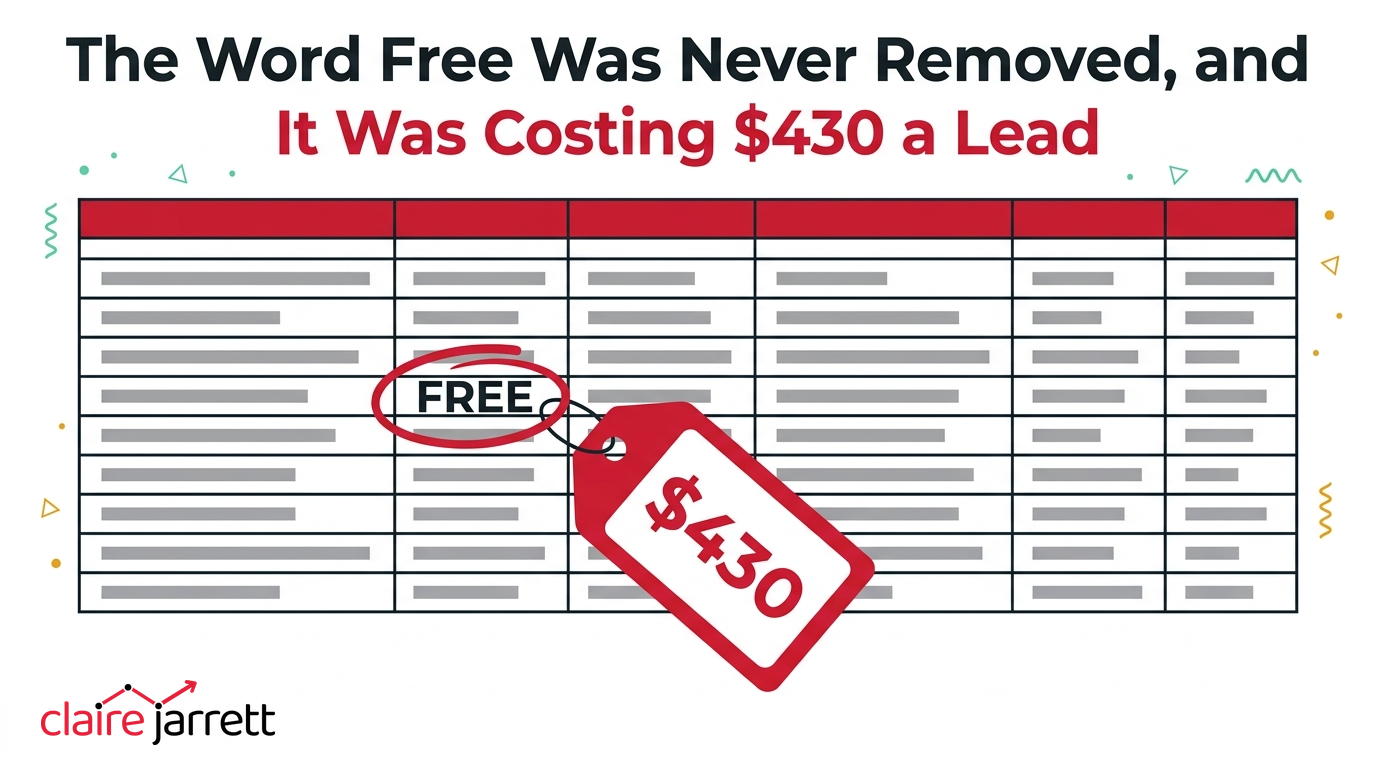
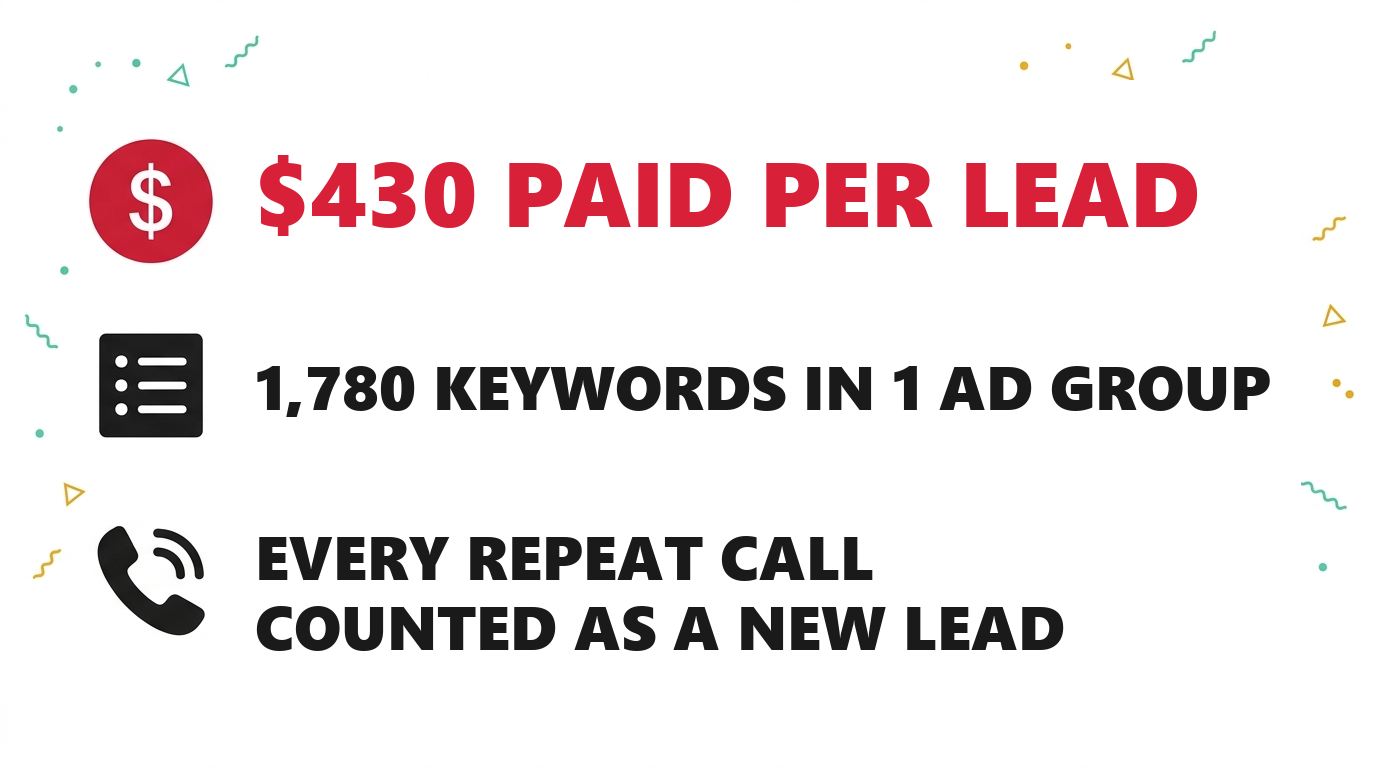
I audited an account recently for the owner of a bankruptcy law practice. In the last 30 days, the account had paid $430 for every lead that came in.
That’s roughly 3 times what I’d expect this kind of lead to cost. Maybe more.
The account had 1 campaign, 1 ad group, and 1,780 keywords all thrown in together, every one of them on broad match.
Why broad match on 1,780 keywords catches almost everyone except who you wanted
The owner thought the account was bidding on specific, relevant searches. Chapter 7 filings. Stopping a foreclosure. The kind of client this firm actually helps.
What it was actually showing up for told a different story. Spanish-speaking lawyers. The Office of the Attorney General. Pro bono services. Free bankruptcy lawyer, with the word free still sitting in the list, uncaught.
Bankruptcy legal aid. General law firms with nothing to do with debt cases. Even the courthouse itself.
Broad match doesn’t find the client you want. It finds everyone who typed a nearby word, and bills you for the difference.
I’d guess 99% of that traffic had never been a realistic client for this firm. People looking for a free service were never going to pay for a bankruptcy filing. People looking for a lawyer who takes pro bono cases were never looking for this one.
Why every call being counted hides the real cost
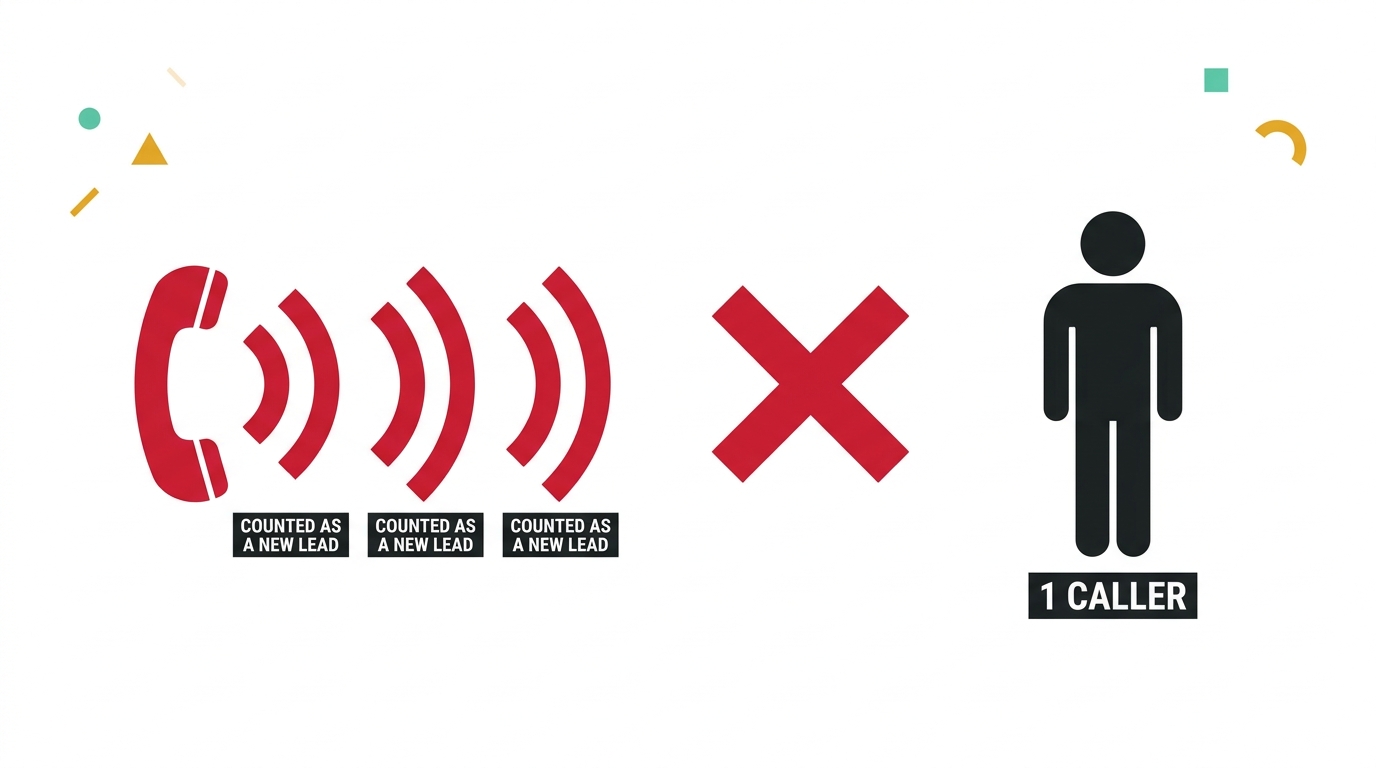
On top of the broad match problem, every single call into the firm was being counted as its own conversion, with no limit on how many times the same person could be counted.
If 1 person called 3 times while deciding whether to book, that showed up as 3 separate leads. The $430 figure was already too high. The real number, per person who actually called once, was higher still.
A properly built account for this kind of firm looks nothing like this. Every distinct way someone might search, Chapter 7, Chapter 13, stopping a foreclosure, needs its own ad group and its own landing page, each one written for that exact search.
Done that way, click-through rate on a campaign like this should sit around 7-8%. That’s what pulls quality score up and cost per click down, because Google can see the ad and the search actually match.
Instead, this account was stuck with 1 ad group trying to speak to everyone who typed anything resembling the word bankruptcy, and a cost per click far higher than it needed to be as a result.
How to check your own account for this
- Open your search terms report and read every unique phrase from the last 90 days, not just the ones with clicks. If you see searches for services you don’t offer, or the word free sitting anywhere near your own offering, broad match has been let off the leash.
- Count your ad groups against the number of genuinely different cases or services you handle. If every type of enquiry is funnelled into 1 group, no single ad or landing page can speak properly to any of them.
Signs a call-based account has never been properly tracked
- Check whether your conversion action counts 1 call per person or every call that comes in. If the same caller can register 3 times, your real cost per lead is being hidden under an inflated conversion count.
- Search your own keyword list for the words free, cheap, and pro bono. If any of them appear without a negative sitting against them, you’ve been paying to attract the one type of enquiry guaranteed never to become a client.
The bigger point
Nobody built this account to waste money on purpose. It was set up once, broad match was left switched on, and nobody ever went back in to see what it had actually been catching.
That’s exactly where a Google Ads consultant earns their fee, not by writing cleverer ads, but by sitting down with the search terms report and reading what’s actually in there. The fix isn’t a bigger budget chasing the same broad list. It’s narrower ad groups, proper negatives, and a call tracking setup that counts a person once.
This sits alongside every wrong lead: an account that rewards free-seekers and pro bono searches with clicks will keep finding more of exactly that. It also helps to have never let account ownership slip away in the first place, because nobody fixes a list they can’t get into.
The same pattern shows up with cramming every service into 1 ad group, or with a target CPA campaign never given enough conversions to actually optimise around. Broad match on 1,780 keywords and a target CPA with no realistic signal are the same mistake wearing a different setting.
If you want an honest read on what your own account has actually been bidding on, the audit checklist covers where to look first. You know where I am.
A few questions I get asked
Is 1,780 keywords in 1 ad group always a problem? Yes, if they’re serving different search intents. The number itself isn’t the issue. The issue is cramming Chapter 7 searches, foreclosure searches, and general legal searches into a group that can only write 1 kind of ad.
Why would broad match show ads for free legal aid if we never bid on that? Broad match doesn’t require an exact word match. It matches against anything Google judges as related in meaning, which is how a bid on “bankruptcy” ends up showing for legal aid, pro bono work, and services you don’t offer at all.
How do I stop the same caller being counted 3 times? Set your call conversion action to count once per caller within a set window, rather than every call. Most call tracking tools support this; it’s a setting that’s often simply left on the default.
Would narrower ad groups really bring the cost per lead down that much? In an account this loosely built, yes. Tighter ad groups with matching landing pages typically lift quality score and click-through rate together, and both pull cost per click down directly.
2 ways I can help you get this right
If you want to know what your own account has actually been bidding on, book a free call and we’ll go through it together.
If you’d rather learn to spot this yourself before the next agency hands you a dashboard, my masterclass How to Overtake Your Top Google Ads Competitors in 8 Weeks walks through exactly that.

Claire Jarrett
Google Ads consultant since 2007, published author (6 books), and Google Partner. Claire was the first person to launch Google Ads training in Europe and has helped thousands of professional service businesses scale their leads.
More about Claire