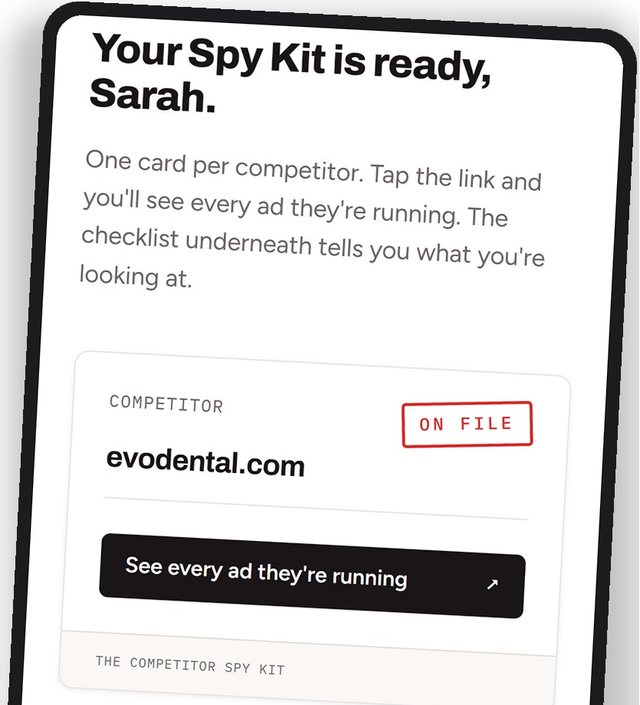
1 Booking a Day on $35, and the 1 Keyword Quietly Eating the Budget
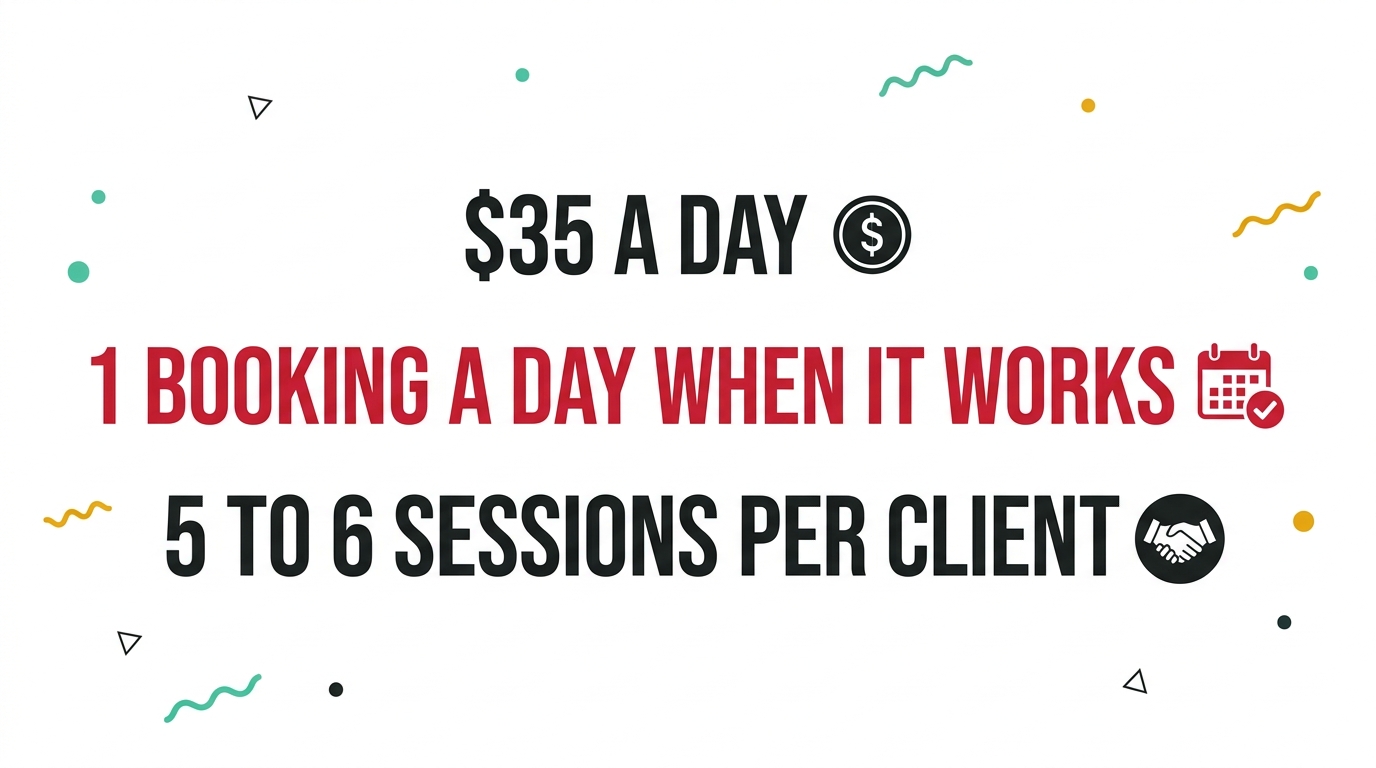
I had a call recently with a one-to-one anxiety coach who runs his own Google Ads. He spends about $35 a day, which works out near $1,000 a month.
When it’s working, he told me, he gets around a booking a day. Each client then stays for 5 or 6 sessions. For a solo practice, that’s a very good return.
Then it stops. Some weeks he gets nothing but time wasters, and no bookings at all.
Why 1 booking a day can switch itself off
He had a theory for the quiet weeks. He was sure it was his website address, or the platform his site was built on.
So he tried a different address. The ads picked up after a few days, ran well for about 2 or 3 weeks, and then drifted back to normal.
He tried another address. Same pattern. He paid about $1,300 to have the whole site copied onto a different platform. Again, a few good weeks, then nothing.
Every fix helped for a few weeks and then faded. Chances are none of them reached where the budget was really going.
Without more testing I can’t say for certain why each change helped for a while. What I could see was what the account was spending on, and that is where I’d look first.
Why Google spends your budget on the easiest keyword
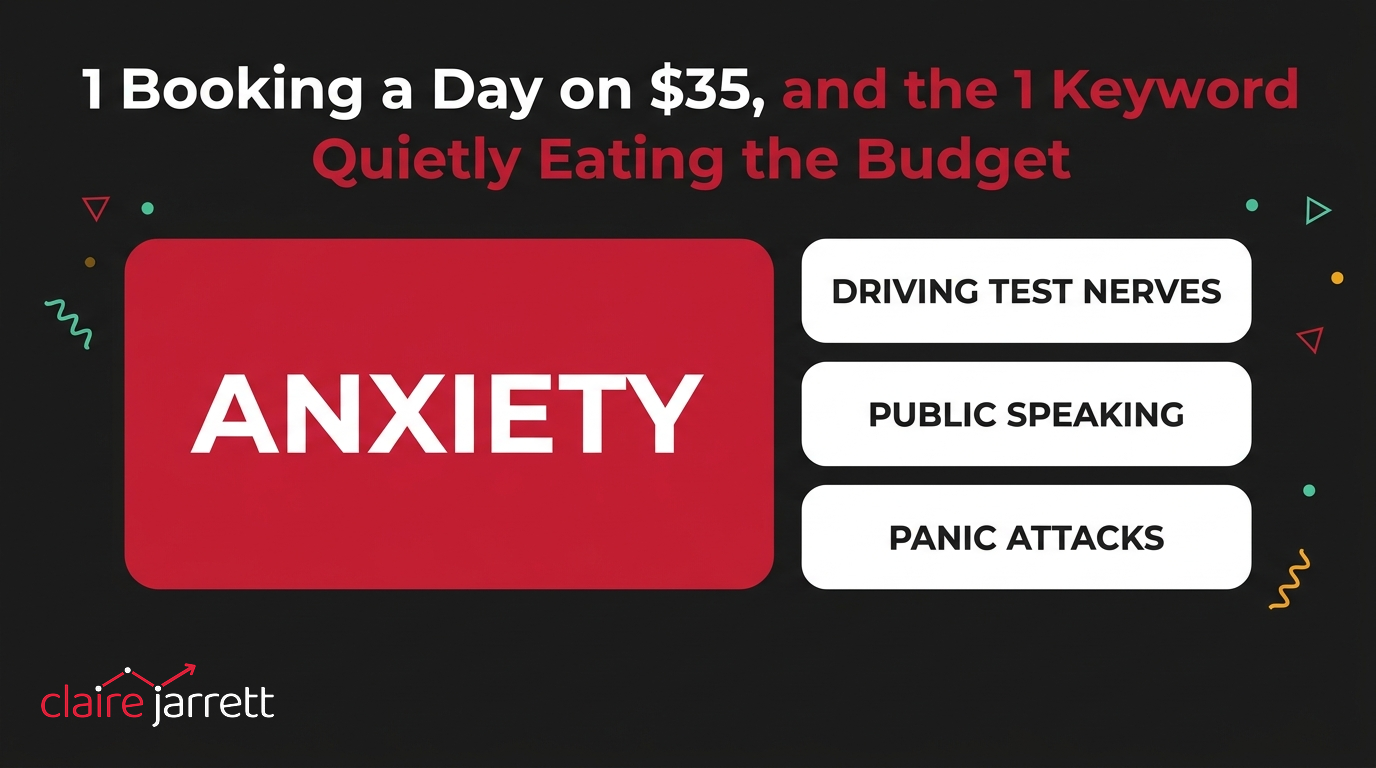
When I looked at what his account was showing for, the top keyword was a single broad word: anxiety.
Think about who types that. Someone who hasn’t decided what they want yet. An app, a book, a course or a person to work with could all be the answer.
His account also held far better keywords. Driving test nerves, public speaking, panic attacks. Each had its own landing page, which he’d built himself.
But all of them sat in 1 campaign with 1 budget. Google doesn’t spread a budget fairly. It goes where it can find volume easiest.
So the broad word took the money, and the specific keywords almost never got a look in. He’d built a landing page for each problem. Google just wasn’t showing them.
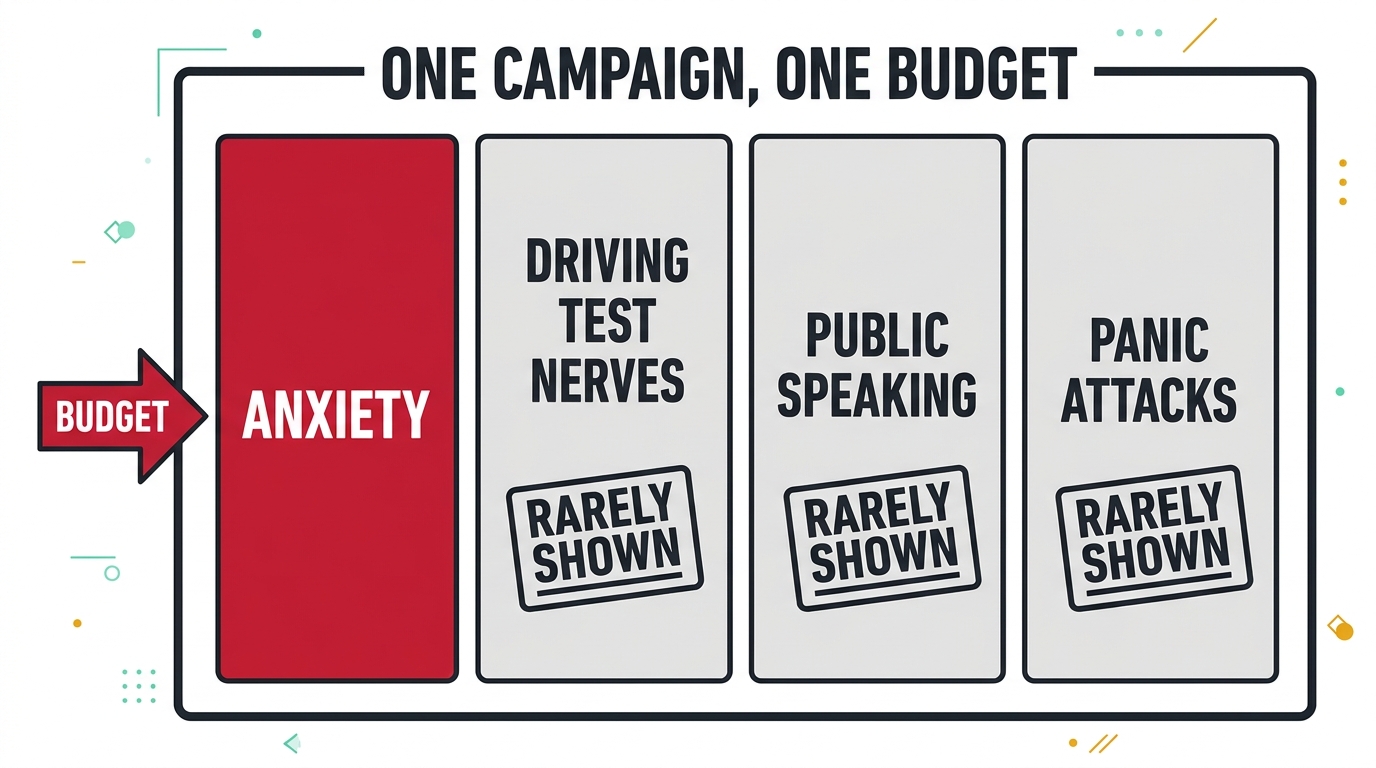
This is the same thing I covered in one shared budget in a very different business. A shared budget picks a winner, and it’s rarely the one you wanted.
What the account should have looked like
A new website isn’t the first fix. It’s 1 campaign per problem he solves, each with its own ring-fenced budget. A modern, clean site helps once the campaigns are split by problem.
A campaign for driving test nerves. A campaign for public speaking. A campaign for panic attacks. Each campaign can only spend on its own keywords, so the broad word can’t take the lot.
It also changes what he can charge. Someone searching for a local coach near them will pay $80 to $190 an hour, at best. Someone who has typed the exact problem they want solved will pay for a programme.
I’ve worked with someone in this space who sold a fixed programme for driving test nerves at around $3,000. That’s the same practice, with the same skills, priced by the problem instead of the hour. It also opens the door to clients who work with him over a video call instead of coming to his room.
How to check your own account for this
- Open your keyword report and sort by spend. If 1 short, broad word takes most of the budget while your specific keywords have a handful of impressions, Google is spending where it’s easiest.
- Look at your best landing pages and ask how many clicks they get. A page you built for a specific problem with almost no traffic is a sign the keyword behind it is being starved.
- List every problem you solve and count the campaigns. If 6 problems share 1 campaign, they are fighting for the same budget, and the broadest one wins.
Signs you’re fixing the wrong thing
- Each fix helps for a few weeks and then fades. If the changes never reached where the budget is going, the old pattern is likely to return.
- Your competitor appears at the top for everything. He wondered whether a rival was spending a fortune. A tool estimated about $14,000 a month, at around $110 a session, which couldn’t be right.
- You only look at the headline number. A booking a day sounds fine. It can hide how much of the budget is going on searches that were never going to book.
The bigger point
He had done a lot right. He built a page for each problem and ran the whole account himself.
What he hadn’t been shown is how Google chooses where to spend. Once you know that, the quiet weeks likely make more sense, and so might why nothing he changed made the good weeks stay.
That’s the first thing I look for in an account. It’s close to every wrong lead: the account follows whatever it’s fed, so what’s in it matters more than the settings.
The same pattern shows up with 1 ad group holding every service, and with target CPA campaigns that never had enough conversions to work from. A PPC consultant should be checking all of it.
If you want to see where your own budget is going, the audit checklist covers where to look first. You know where I am.
A few questions I get asked
Why does my Google Ads performance drop for weeks and then recover? It may be that the account keeps spending on the broadest keyword while the specific ones rarely get shown. I’d check the keyword report before changing the site again.
Should I put every service in 1 campaign? Not if they have different budgets or different value. Each problem you solve is a different search, and a separate campaign with its own budget stops the broadest keyword taking everything.
Is a broad keyword always bad? Not always, but a very broad word is a poor fit for a small budget. I’d test without it and give each problem its own campaign.
Is it better to charge by the hour or by the problem? Pricing by the problem usually lets you charge more, and it suits Google Ads, because the person searching has named exactly what they want solved.
2 ways I can help you get this right
If you want to know where your own ad budget is really going, book a free call and we’ll go through it together.
If you’d rather learn to spot this yourself, my masterclass How to Overtake Your Top Google Ads Competitors in 8 Weeks walks through exactly that.

Claire Jarrett
Google Ads consultant since 2007, published author (6 books), and Google Partner. Claire was the first person to launch Google Ads training in Europe and has helped thousands of professional service businesses scale their leads.
More about Claire